Rock Around Siam
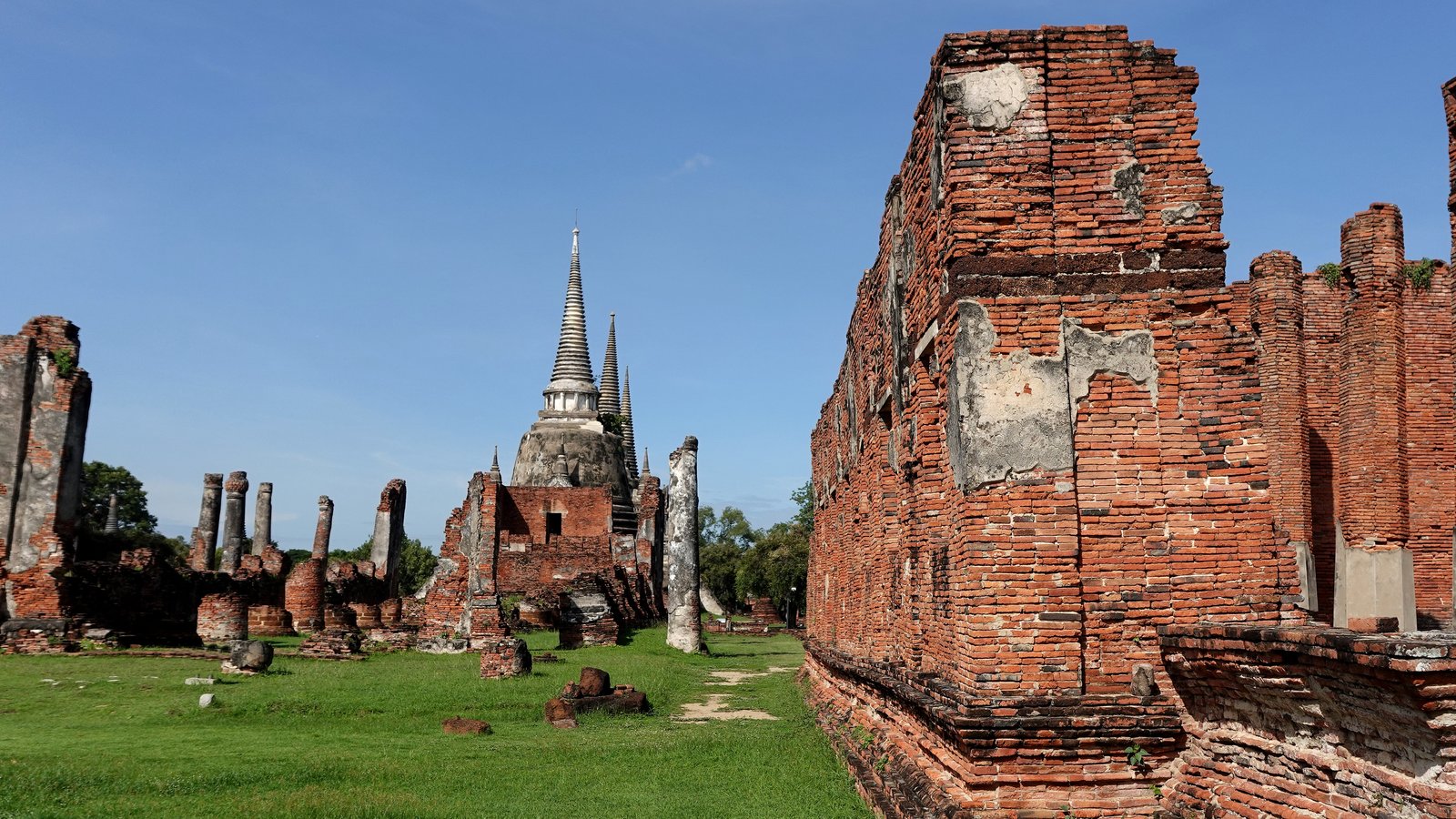
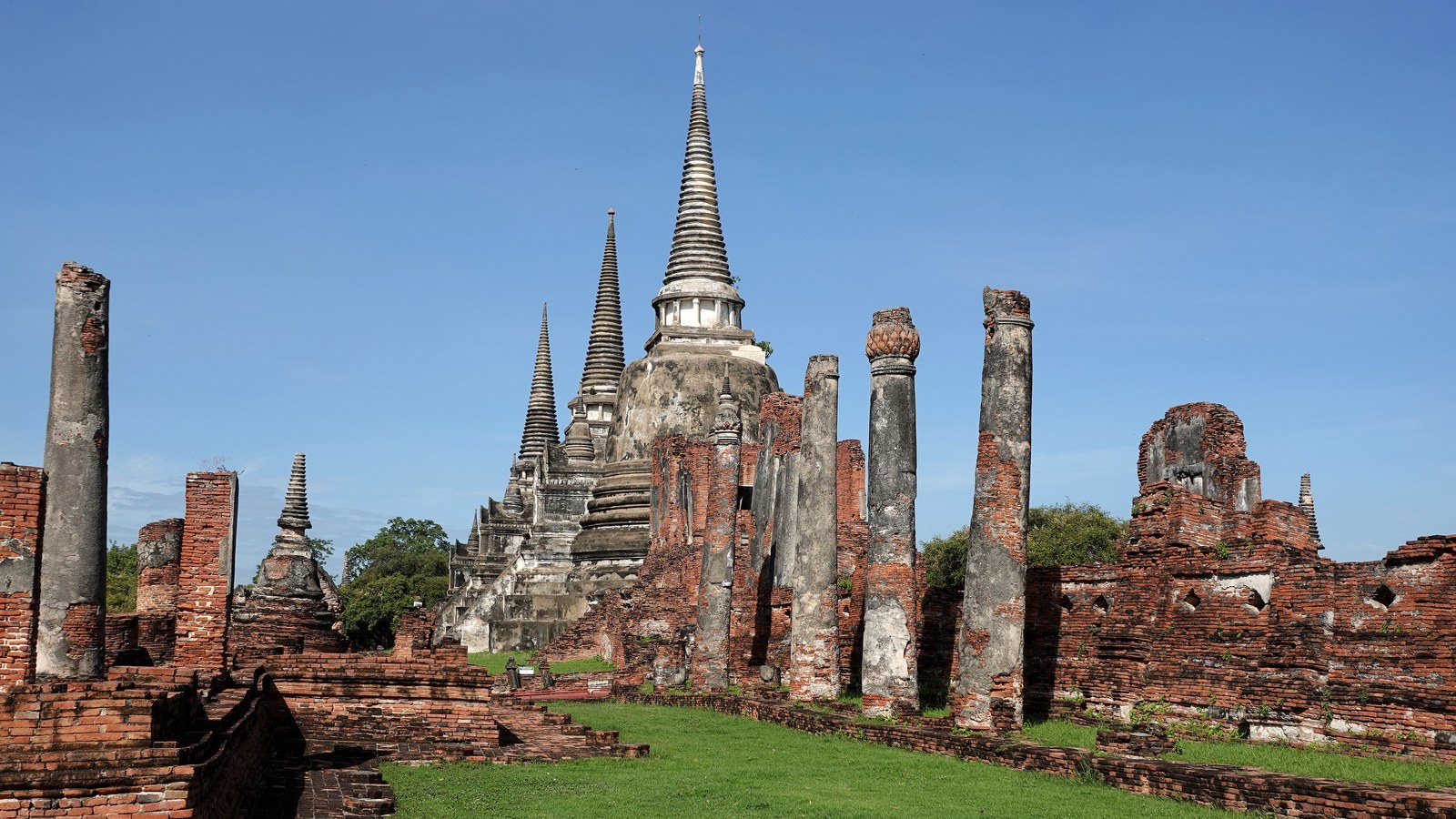
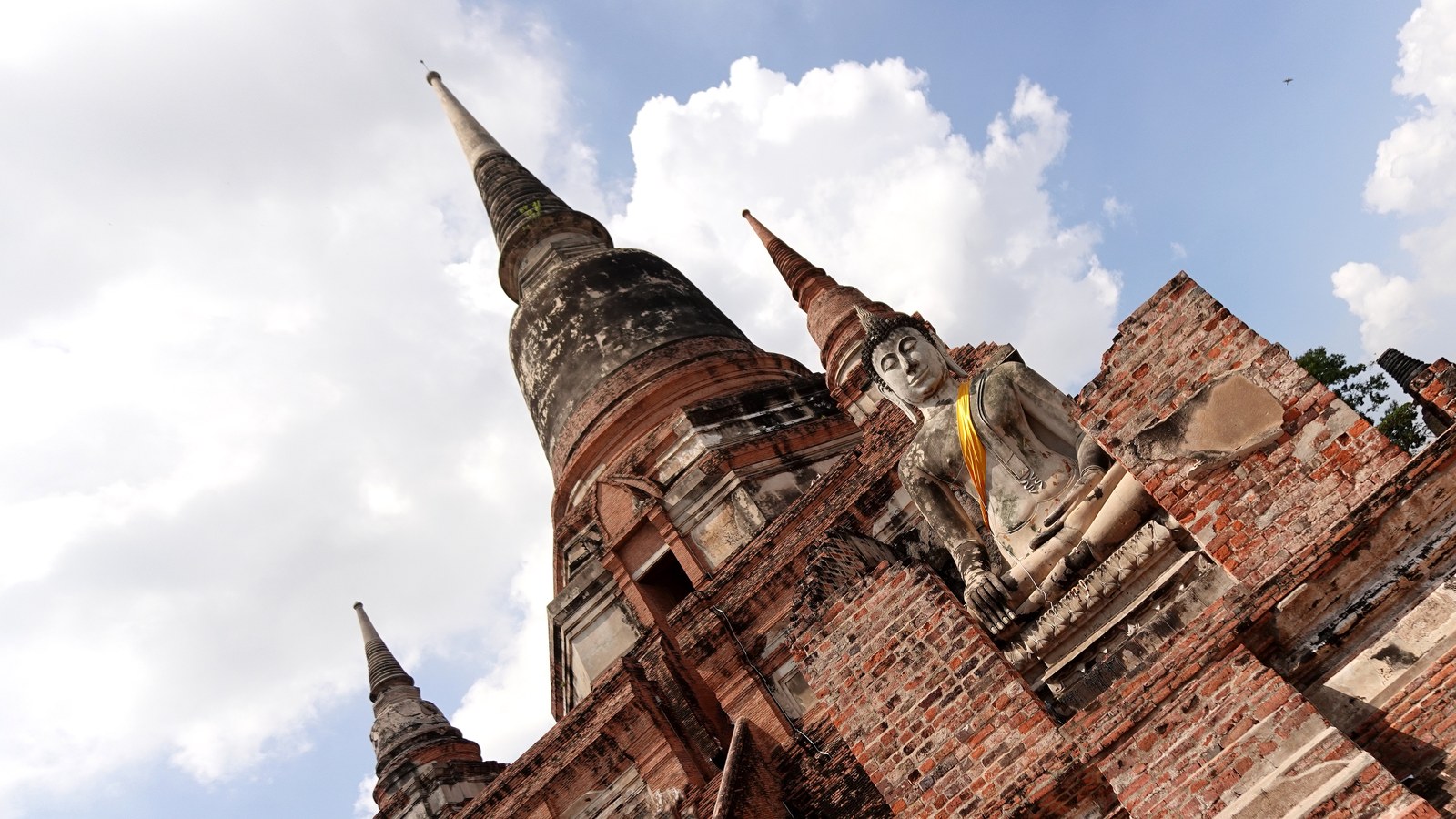
Wat Phra Si Sanphet and its three great royal chedis at the heart of the Ayutthaya Historical Park, former capital of the kingdom of Siam in Thailand.

Destination · Central

Ayutthaya

The former capital of the kingdom of Siam, Ayutthaya reveals — among temples, ruined palaces and riverside communities — the traces of a cosmopolitan city where, for more than four centuries, Siamese traditions, foreign influences, international trade and royal power came together.

WELCOME


Ayutthaya — the legacies of a royal capital

The former capital of the kingdom of Siam, Ayutthaya preserves the monumental traces of a city that was, for more than four centuries, a great political, religious and commercial centre of Southeast Asia. Among temples, prangs, monasteries and palace ruins, the city bears witness to the exchanges that once linked Siam to China, Japan, Persia and Europe. Around the historical park, riverside communities, markets, Buddhist traditions and local craftsmanship carry this legacy forward. Ayutthaya thus remains a living territory, where royal history, spirituality and river cultures continue to meet.

IMMERSIVE EXPERIENCES IN AYUTTHAYA


An experiential programme offering a scholarly, bucolic reading of the former capital of Siam — seen not as a mere collection of ruins, but as one of the great historical, religious, artistic and diplomatic centres of Southeast Asia. By bicycle, by tuk-tuk or a combination of the two, the itineraries favour a gentle pace, conducive to observation and to understanding these places. Three complementary days reveal its principal dimensions. The Historical Heritage of Ayutthaya day sheds light on the organisation of the city, the power of the kingdom, the role of Buddhism and the diplomatic skill that fostered its influence. The Artisanal Heritage of Ayutthaya day explores traditional know-how, the decorative arts and the world of the Ramakien. The Diplomatic Heritage of Ayutthaya day delves, as far as Lopburi, into Franco-Siamese relations and the embassies exchanged between 1685 and 1688 under the reign of King Narai. The first two days are essential to understanding how Ayutthaya became, over four centuries, a major cultural and commercial centre in Asia and one of the historical matrices of Bangkok. Gastronomy accompanies this immersion through chosen stops and a few emblematic specialities, from Roti Sai Mai to Khanom Chin and Foi Thong.

PROGRAMME


Our experiences in Ayutthaya.

A selection of private journeys, to enjoy on their own or to combine over the course of your stay.

History | Religion

Historical Heritage

To the origins of Ayutthaya: royal temples, sacred treasures and foreign trading posts at the heart of the former capital of Siam.

This eight-hour day is devoted to the historical heritage of Ayutthaya, former capital of Siam and one of the great political, religious and commercial centres of Southeast Asia. By bicycle, by tuk-tuk and by private vehicle, the itinerary follows a progression designed to understand the formation of the island city, the assertion of royal power, the role of Buddhism and the international openness that shaped its influence over more than four centuries. The geography of the canals, the old circulation routes and the religious ensembles thus serves as a thread for reading the city.

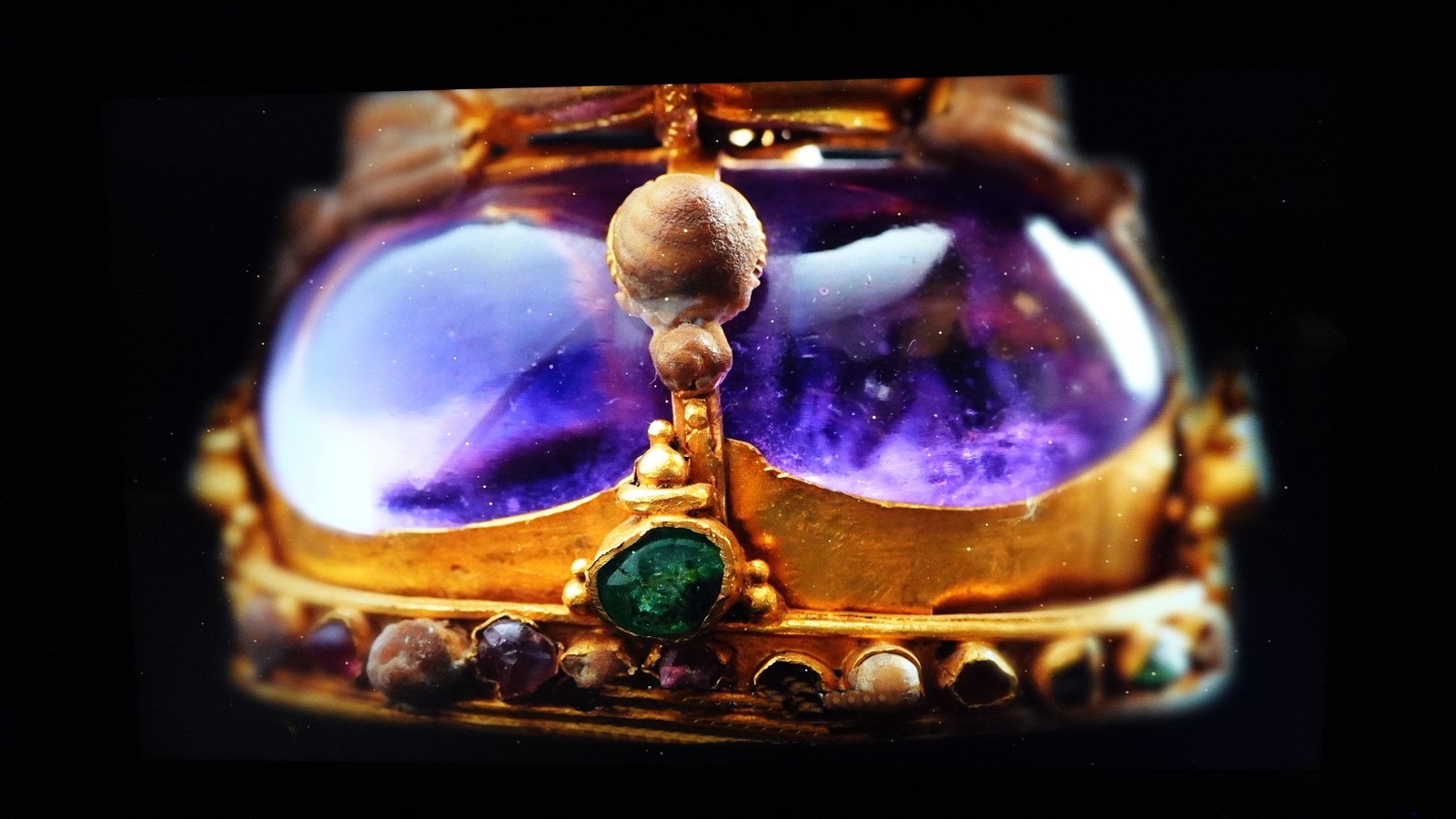
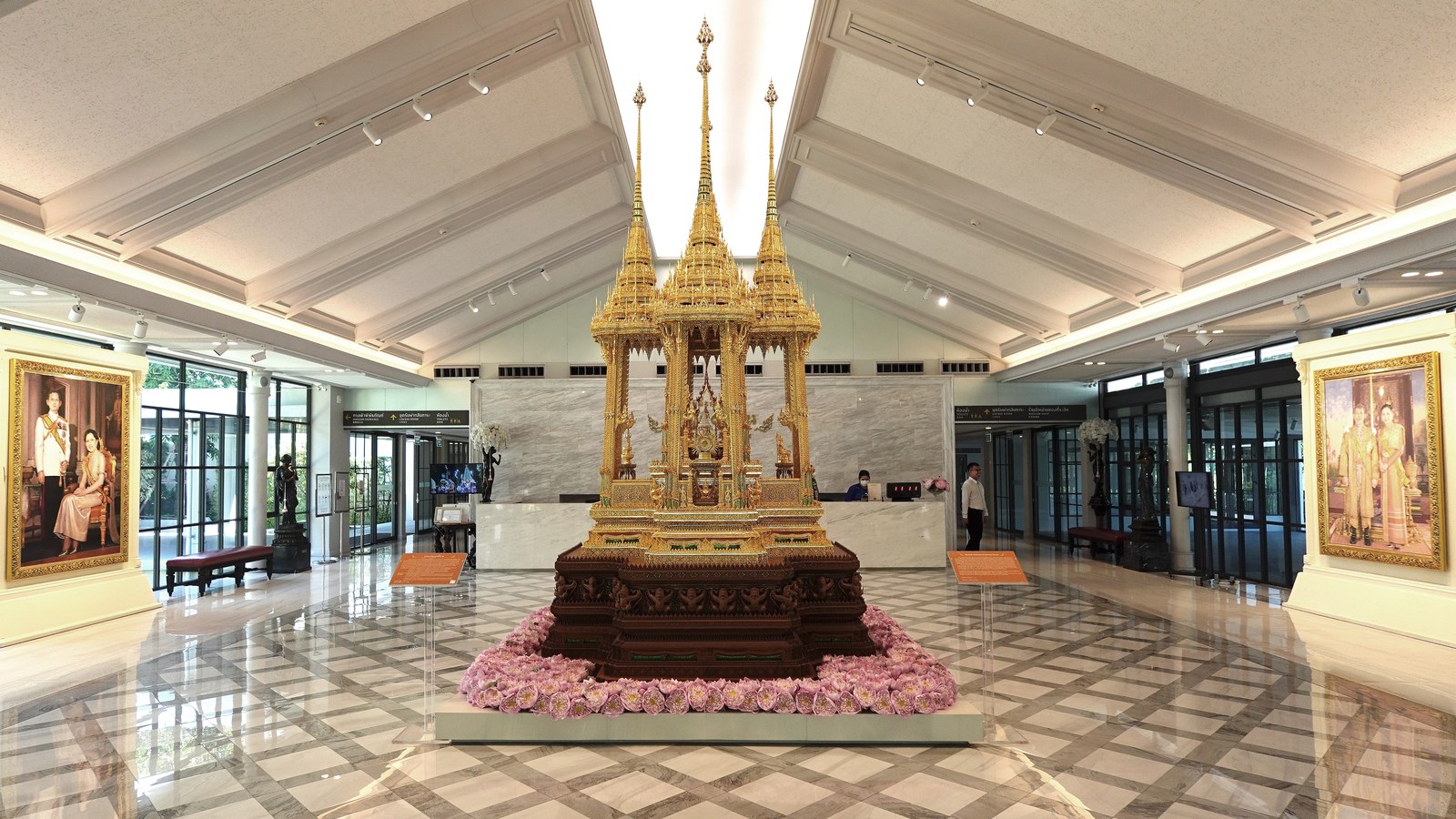
The discovery begins at the Chao Sam Phraya National Museum, whose collections offer essential keys to reading the remains of the ancient city. The exhibition devoted to the golden treasures highlights the pieces recovered during archaeological excavations, while the models, reliquaries and ritual objects convey the spiritual and artistic importance of Ayutthaya's great sanctuaries. The reconstruction of the crypt of Wat Ratchaburana, in particular, helps one better understand the function of relics, votive deposits and painted decoration in the religious architecture of the period.

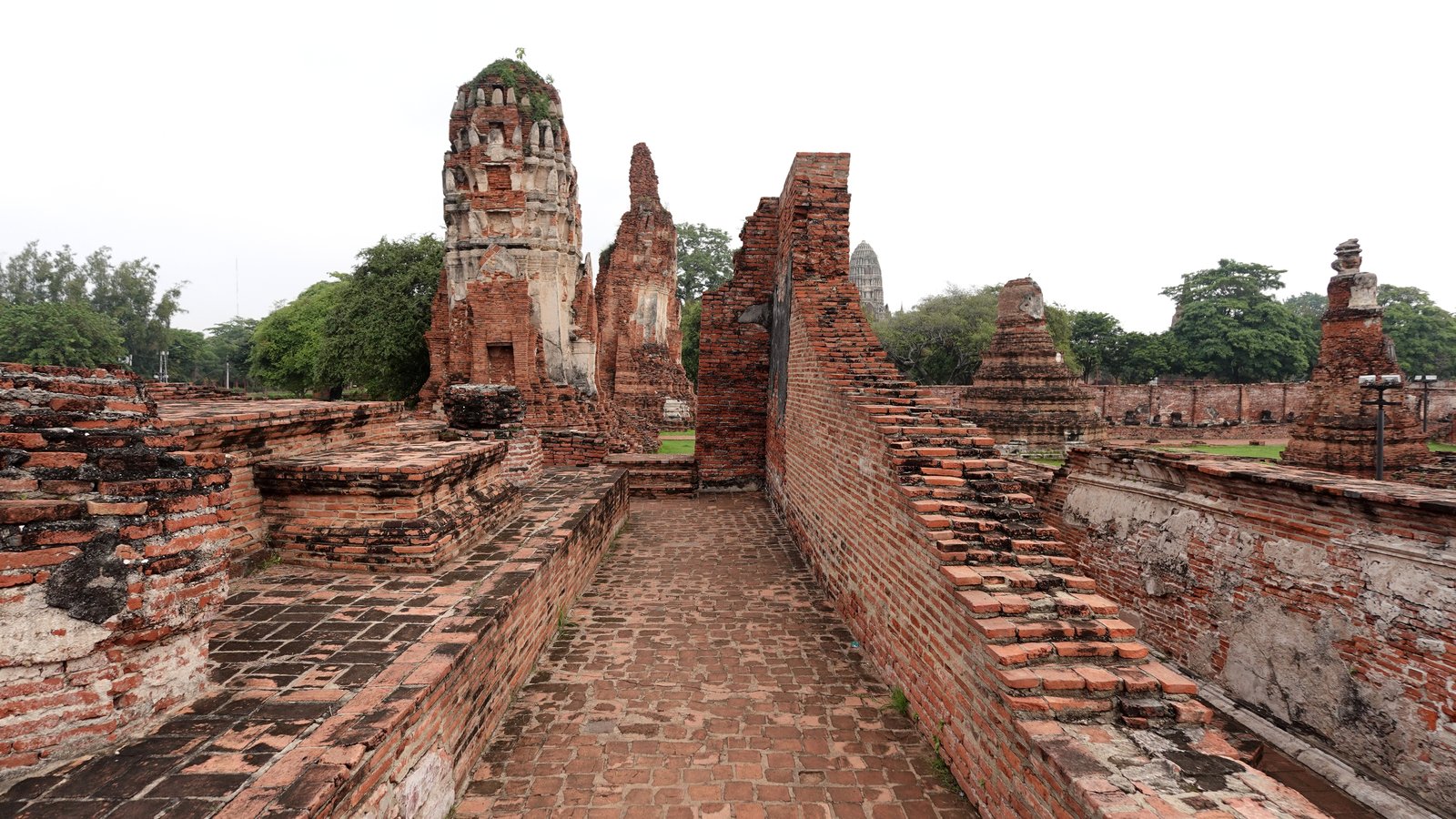
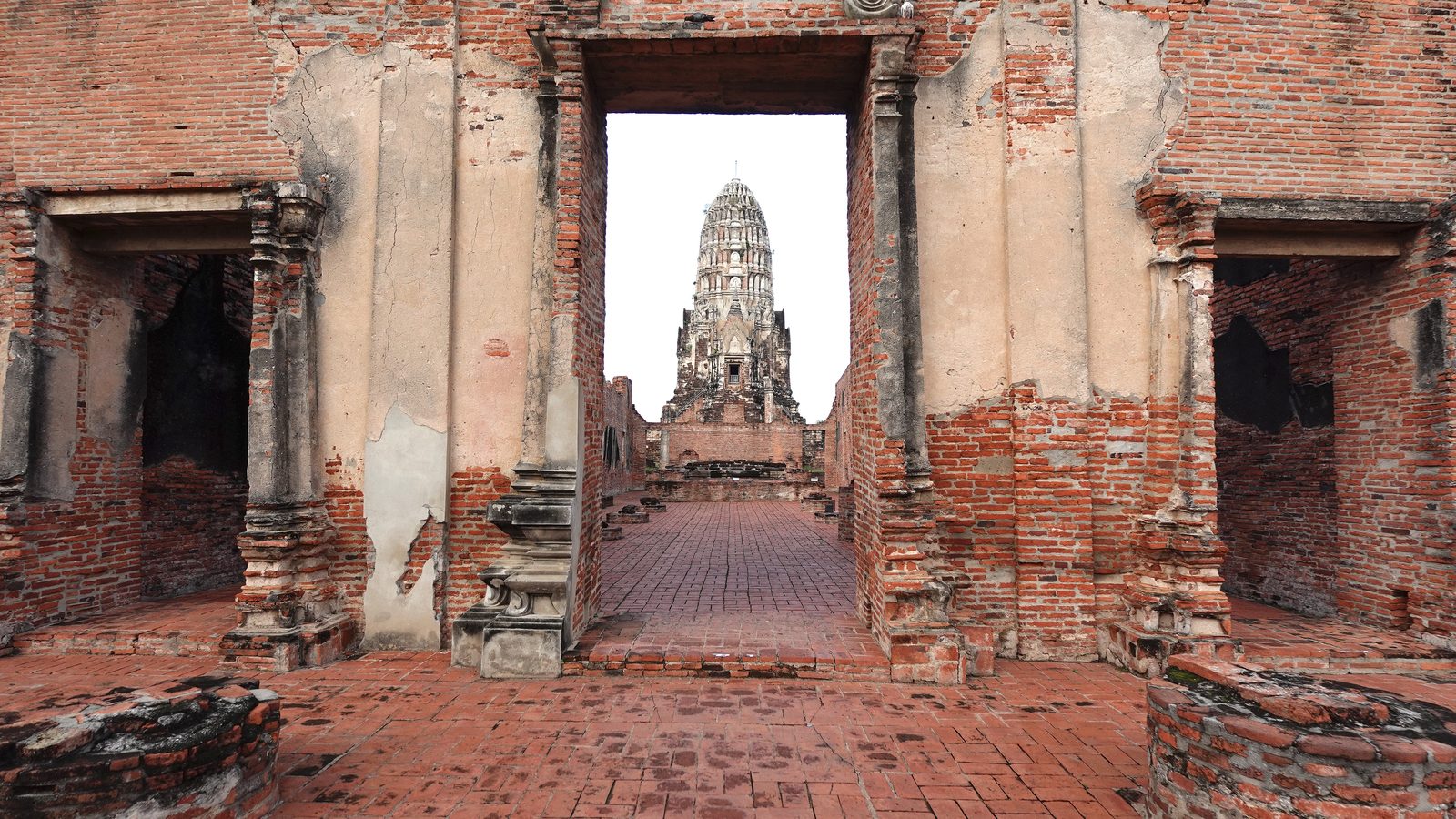
The itinerary continues through three major monuments of the historical park. Wat Phra Si Sanphet, a former royal temple, recalls the close relationship between monarchy and religion at the heart of the capital. Wat Mahathat, seat of an important monastic community, bears witness to the centrality of Buddhism in the urban and political organisation of the kingdom. Wat Ratchaburana, founded in the 15th century, stands out for its great prang, its decorative remains and the archaeological richness of its crypt.

The afternoon reveals another essential dimension of Ayutthaya: that of a cosmopolitan metropolis connected to the great Asian and European trade networks. The former Japanese and Dutch quarters, today interpreted by the Japanese Village and Baan Hollanda, shed light on the commercial and diplomatic relations maintained with Japan and the United Provinces. The remains of the Portuguese trading post, where excavated burials survive, recall how old the European presence in Siam was.

The French stage finally leads to the Catholic church of Saint Joseph, heir to the mission established in the 17th century on the banks of the Chao Phraya. Its history evokes the relations forged between the Siamese court, the missionaries and the French envoys at a time when Ayutthaya was one of the principal diplomatic crossroads of the region.

Art | Craft | Design

Artistic Heritage

Court arts, high-end craftsmanship and architecture under many influences: eight hours at the heart of Ayutthaya's artistic heritage.

This eight-hour day explores the artistic heritage of Ayutthaya through the decorative arts, craftsmanship, architecture and the transmission of know-how. Conceived as a structured cultural journey, the itinerary reveals how these practices shaped — from the royal court to the artisans' workshops — an aesthetic deeply bound to the history of the kingdom and to the cultural identity of Thailand.

The discovery begins at the Sustainable Arts and Crafts Institute of Thailand (SACIT), a leading institution devoted to preserving and promoting Thai arts and crafts. Silks, weavings, decorative objects and regional know-how open a reflection on the continuity between ancient traditions and contemporary creation. This first stage also highlights the decisive role of Queen Sirikit and the SUPPORT Foundation in safeguarding, transmitting and gaining recognition for a craftsmanship long associated with rural communities and court production.

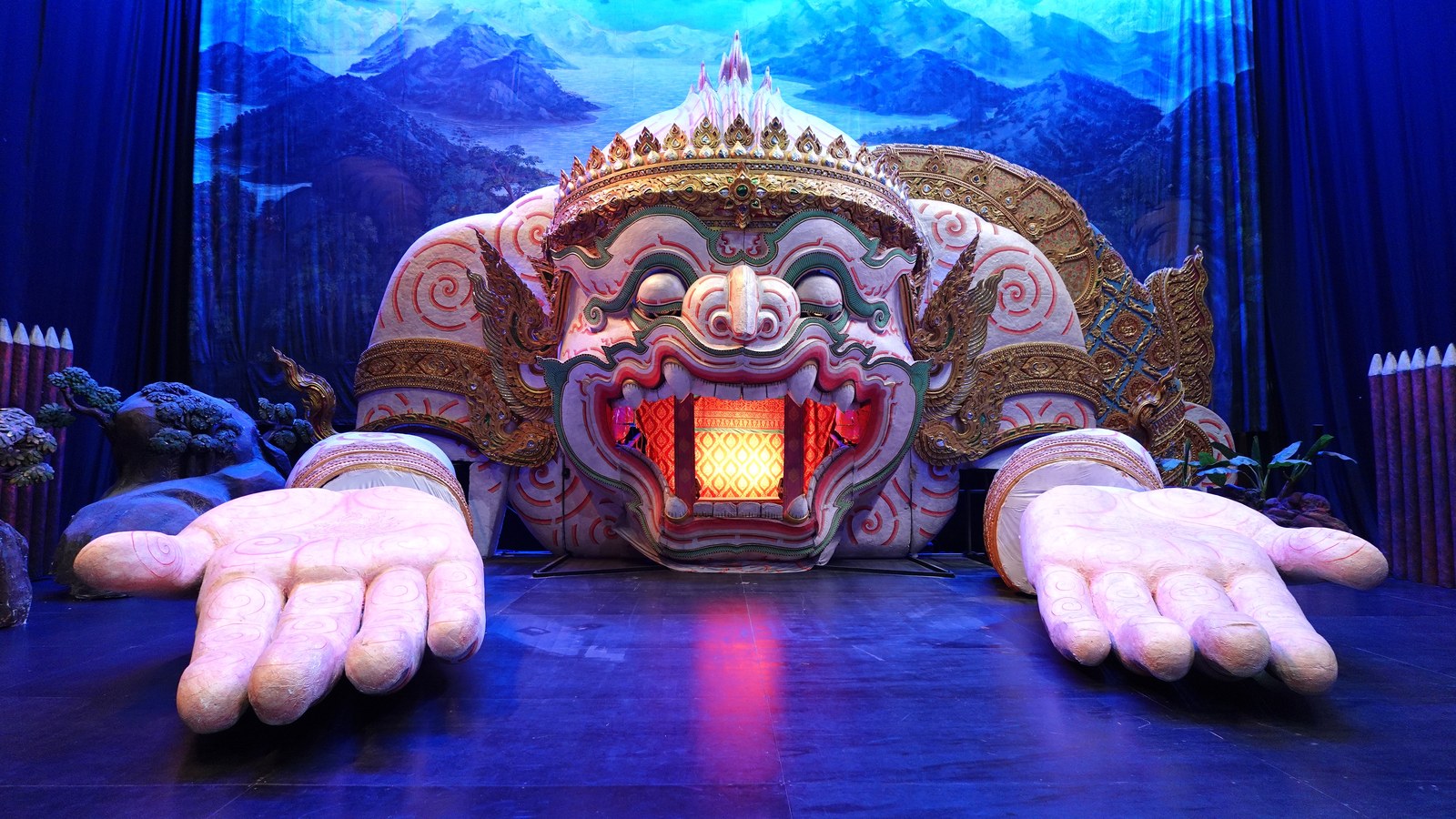
The journey continues at the Khon Learning Center, devoted to khon, the masked dance-drama inscribed on UNESCO's Intangible Cultural Heritage list. Inspired by the Ramakien, the Thai adaptation of the Ramayana, this court art combines codified choreography, music, embroidered costumes, painted masks and symbolic gestures. Discovering it illuminates the close relationship between performance, iconography, craftsmanship and royal culture.

At the Arts of the Kingdom Museum, the experience takes on a more monumental dimension. The works on display, created by highly skilled artisans for the royal family, illustrate the richness of Thai decorative techniques: metalwork, inlay, sculpture, embroidery, lacquer and weaving. Together they convey the degree of precision, patience and sophistication that characterises these creations.

The day continues at Bang Pa-In Palace, a royal residence developed in the 19th century under Rama IV and Rama V. Thai pavilions, Chinese-inspired buildings and European architecture compose a singular landscape, revealing the cultural exchanges and aesthetic transformations of Siam in the modern era.


The day ends with a sunset cruise on the three rivers that encircle the island of Ayutthaya — the Chao Phraya, the Pa Sak and the Lopburi. Paced by the contemplation of three emblematic temples (Wat Phanan Choeng, Wat Phutthaisawan and Wat Chaiwatthanaram), this outing offers a particularly evocative conclusion to a first immersion in the city's artistic heritage.

History | Religion

Diplomatic Heritage

Lopburi in the time of King Narai: Franco-Siamese diplomacy, a royal palace and 17th-century Khmer heritage.

About two hours from Ayutthaya, this eight-hour day by private vehicle explores one of the most fascinating episodes in the diplomatic history of Siam: the rapprochement begun under the reign of King Narai with the France of Louis XIV. A favoured royal residence in the 17th century, Lopburi then became a veritable political laboratory where commercial ambitions, diplomatic strategies, court rivalries and European missionary ventures intersected.

The route begins at the Vichayen House, an architectural complex associated with Constantine Phaulkon, the Greek adviser to King Narai who became one of the principal intermediaries between the Siamese court and the Western powers. Its buildings, where European influence meets Siamese architectural forms, recall the intensity of the exchanges that accompanied the French embassies of 1685 and 1687. Behind the diplomatic ceremony lay many interests: the Siamese wish to diversify alliances in the face of regional and European powers, French commercial ambitions, Catholic missionary projects and the personal strategies of those present at court.

The visit continues at the Somdet Phra Narai National Museum, housed in the former palatial complex of Phra Narai Ratchaniwet. Built from the 1660s, this secondary palace welcomed the sovereign several months a year and was the setting for major diplomatic encounters. The collections make it possible to set these Franco-Siamese relations within a broader history, from the ancient cultures of the region to the political and artistic influence of the kingdom of Ayutthaya.

The year 1688 abruptly marks the end of this phase of openness. Narai's illness and then death, the execution of Phaulkon and Phetracha's rise to power led to the expulsion of the French forces and a profound reorientation of the kingdom's foreign policy. Far from a simple confrontation between Siamese and Europeans, this rupture reveals above all the fragility of the alliances built around the court and the resistance aroused by foreign influence.

The day finally places this diplomatic episode within the long history of Lopburi through Wat Phra Si Rattana Mahathat and Phra Prang Sam Yod. These sanctuaries of Khmer heritage recall that, long before Narai's time, the city already held a strategic position at the heart of the political and religious networks of mainland Southeast Asia.

In the mood for Ayutthaya?

Let's compose your escape to the ancient capital.