Rock Around Siam
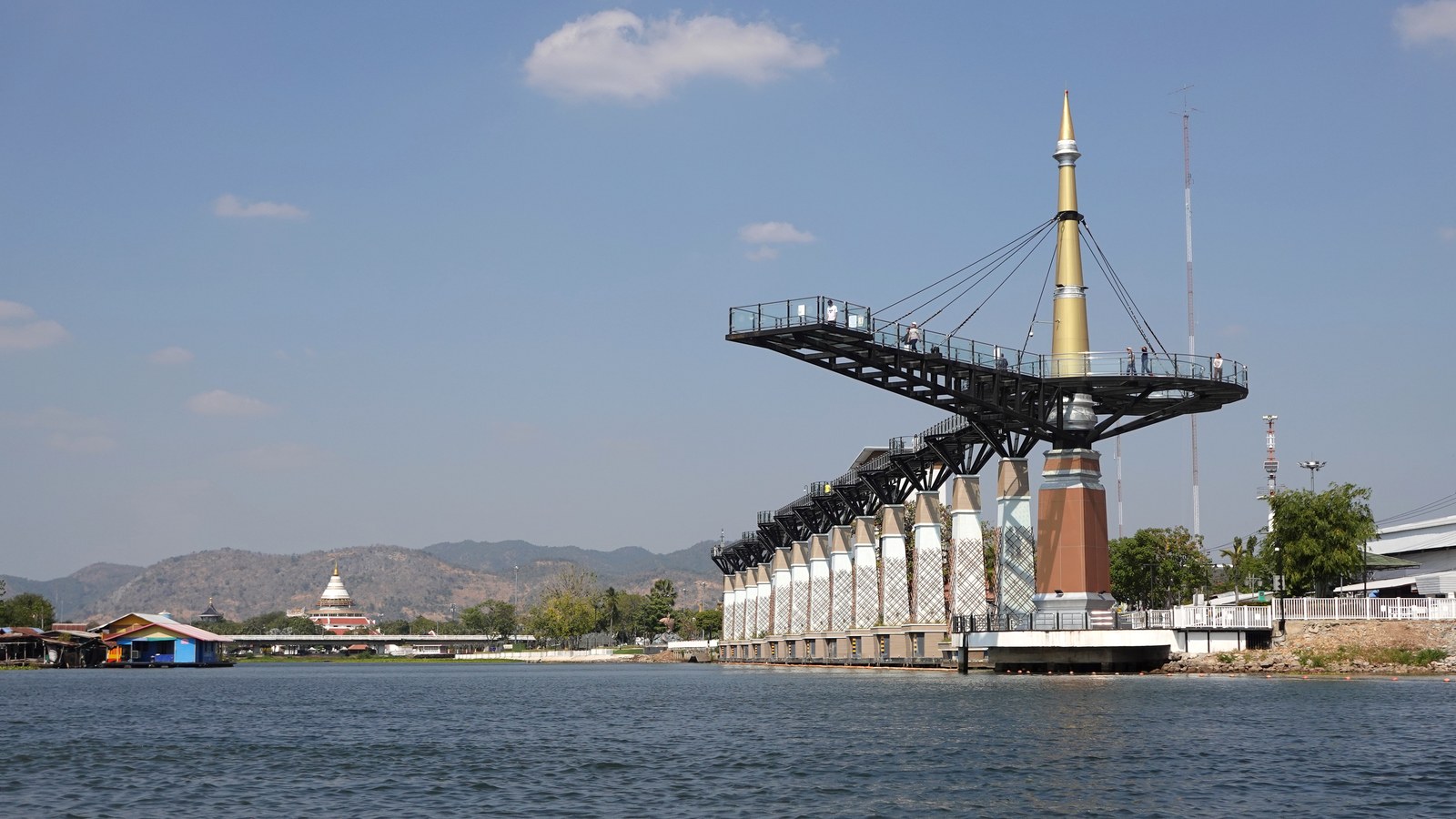
Skywalk Kanchanaburi City on the banks of the Mae Klong river in Kanchanaburi, an urban and cultural experience in Thailand.

Destination · West

Kanchanaburi

Between the memory of the River Kwai, jungle landscapes and karst reliefs, Kanchanaburi reveals a Thailand shaped by history, communities and nature, where railways, temples, villages and wide-open spaces compose a territory of remarkable cultural depth.

WELCOME


Kanchanaburi — between rivers and the memory of war

At the confluence of the Khwae Noi and Khwae Yai rivers, Kanchanaburi carries an identity profoundly marked by water, trade and history. The town is inseparable from the Second World War and the construction of the Thailand–Burma railway, of which the bridge, cemeteries and places of memory survive. Beyond this legacy, temples, markets, riverside houses and local communities bear witness to a land shaped by the movements between the central plains and the western mountains. Kanchanaburi thus combines historical memory, regional traditions and ways of life closely bound to the rivers.

IMMERSIVE EXPERIENCES IN KANCHANABURI


Kanchanaburi is discovered here through a two-day immersive road trip, Kanchanaburi Loop, conceived as a dialogue between spirituality, great landscapes and the memory of war. The first day, Spirituality of the great natural landscapes, explores a province shaped by rivers, rice fields and karst reliefs: the temples of Wat Tham Suea and Wat Tham Khao Noi, the symbolic ascent of the Dragon of Wat Ban Tham, caves, cliffs and the Khmer remains of Mueang Sing. Sanctuaries, paintings and panoramas set the region within the long history of Siam, at the crossroads of religious and military routes. The Meena Cafe then offers a contemplative interlude in the heart of the rice fields, before a night on the River Kwai at the FloatHouse River Kwai Resort. The second day, War memories in the heart of nature, approaches Kanchanaburi through its deepest memories. A private trip up the river leads to Ban Hat Ngio, then to Hellfire Pass and the Konyu Cutting trench, major sites of the "Death Railway". The journey continues to Tham Krasae, the bridge over the River Kwai, the Don Rak war cemetery and the Death Railway Museum. It ends at the Skywalk, a walkway suspended above the confluence of the Khwae Noi and Khwae Yai. As an option, a private speed-boat cruise reveals the town from its river network, between temples, historic quarters, bridges and open horizons.

PROGRAMME


Our experiences in Kanchanaburi.

A selection of private journeys, to enjoy on their own or to combine over the course of your stay.

Nature | Religion

Spirituality of the great natural landscapes

Temples, caves and ancient legacies along the rice fields, mountains and rivers of Kanchanaburi.

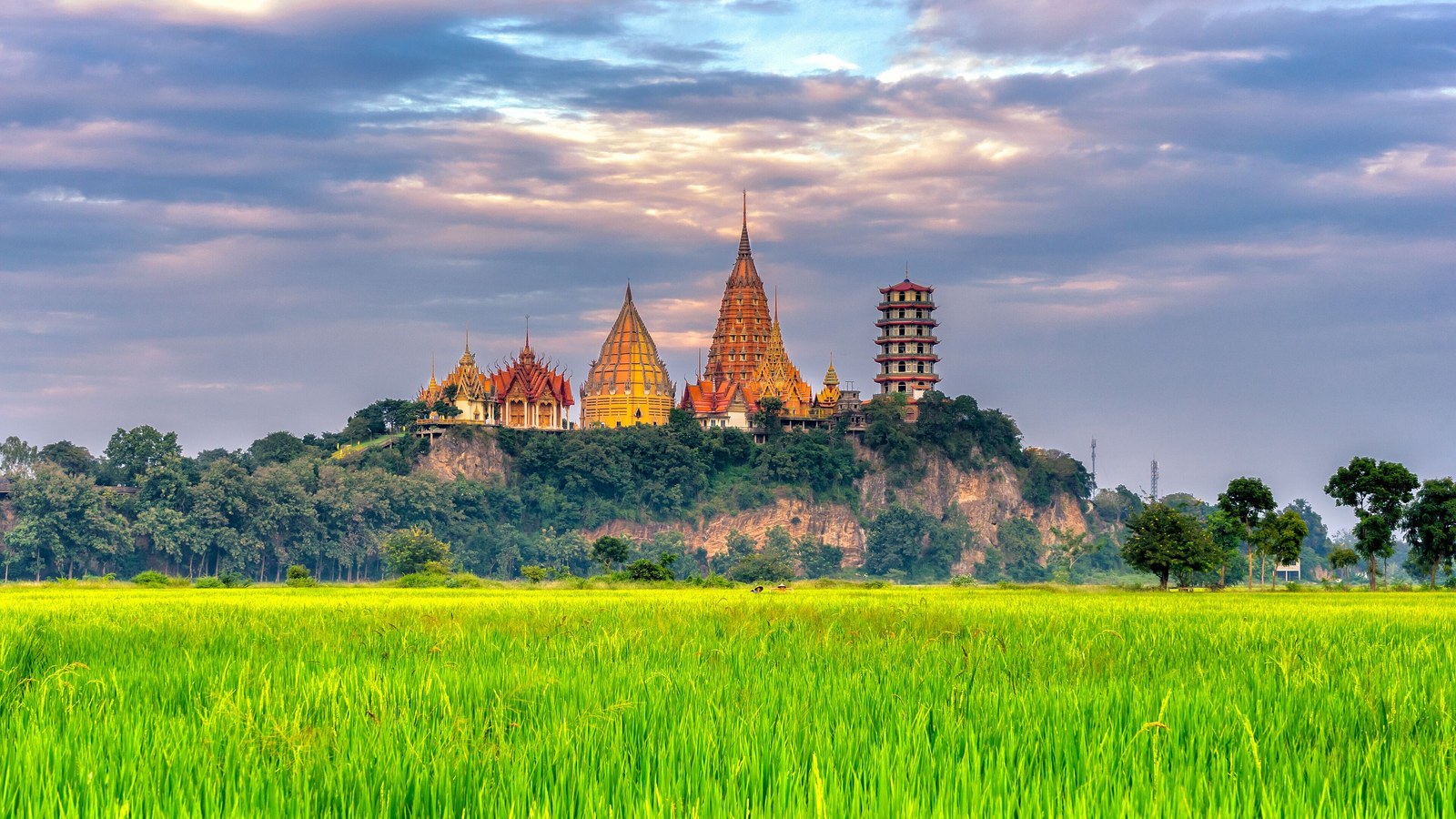
This first eight-hour day by private vehicle explores one of the most striking faces of Kanchanaburi: a land where temples, rice fields, karst reliefs and ancient remains compose a deeply spiritual geography. The journey begins at Wat Tham Suea, dominated by the Phra Chedi Kesa Kaew Prasat, whose decorations evoke the lives of the Buddha, the history of the Siamese sovereigns and the conflicts that long set Siam against the Burmese kingdoms. In this province, set on one of the great axes linking Burma to the central plain, not far from the historic route of the Three Pagodas Pass, these stories take on a particular resonance.

Nearby, Wat Tham Khao Noi introduces a different architectural language and extends this reading of the sacred landscape. From the heights, the gaze takes in the rice plain of Tha Muang, the meanders of the watercourses and the mountains closing the horizon. Below, Meena Cafe offers a singular stop amid the rice fields, reached by a long wooden walkway crossing the crops: a way of slowing down and observing the intimate relationship that here binds farming, reliefs and watercourses.

The itinerary then reaches Wat Ban Tham, known for its spectacular staircase passing through the monumental mouth of a dragon before leading to the sanctuary and the cavities of the hill. The ascent combines Buddhist iconography, vernacular architecture and a physical experience of the relief. Further on, Birds Caves Wall and then Man Wijit Cave introduce a more mineral and contemplative dimension, between limestone walls, vegetation and natural cavities, in a part of Kanchanaburi still largely shaped by geology.

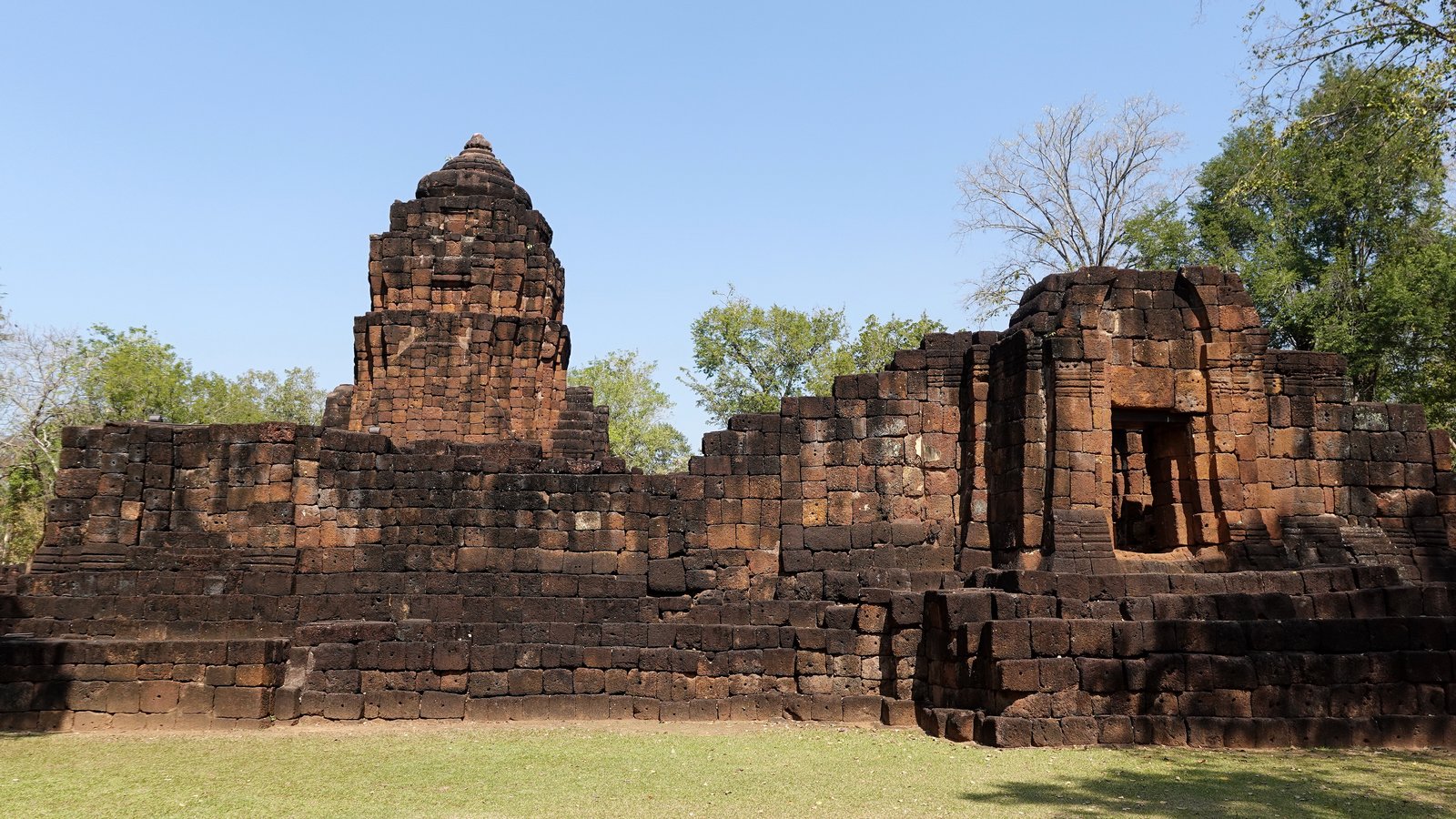
Lunch is served at THREE Boundary, in Khao Noi, in a setting that extends this immersion in the Kanchanaburi countryside. The afternoon is devoted to the Mueang Sing Historical Park, a former fortified settlement marked by Khmer cultural and architectural influence. Laterite sanctuaries, the enclosure and the organisation of the site make it possible to evoke the political, religious and commercial movements that once linked western Siam to the great networks of mainland Southeast Asia.

The day ends on the River Kwai, at the FloatHouse River Kwai Resort, in the heart of the Sai Yok valley. Set directly on the water, the floating villas accompany the shift to another rhythm: dinner by the river, wooded mountains in the background and a night carried by the movement of the current.

History | Nature

War memories in the heart of nature

From the gorges of Hellfire Pass to the bridge over the River Kwai, on the trail of the Death Railway in Kanchanaburi.

This eight-hour day explores one of the most striking chapters of Thailand's contemporary history, in the landscapes of rivers, forests and reliefs that surround Kanchanaburi. Between private navigation, road and railway, the itinerary follows several major sites linked to the construction of the Thailand–Burma line during the Second World War, while setting this memory within the spectacular geography of the Kwai valley.

The day begins on the water with a trip up the river by private speed-boat to the vicinity of Ban Hat Ngio. This first crossing reveals Kanchanaburi from its river network, between wooded banks, limestone reliefs and villages established along the water, before reaching Hellfire Pass by road.

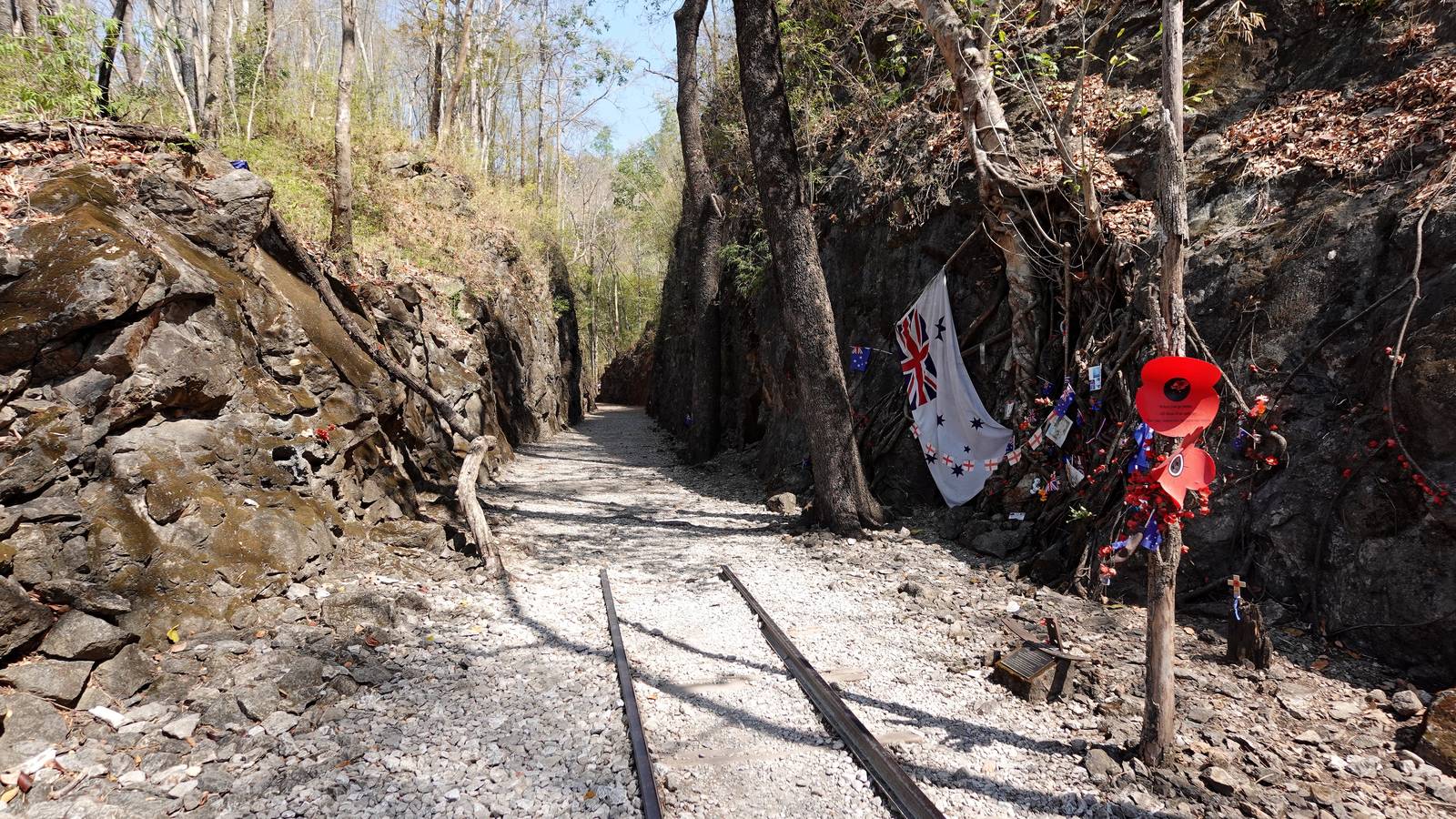
The Hellfire Pass Interpretive Centre introduces the history of the railway built between 1942 and 1943 by the Japanese army to link Thailand to Burma. Allied prisoners of war and tens of thousands of Asian labourers were mobilised in extremely harsh conditions to open this line through mountains and jungle. The memorial route continues at Konyu Cutting, a deep trench carved straight into the rock. Night work by torchlight gave the site its nickname of "Hellfire Pass".

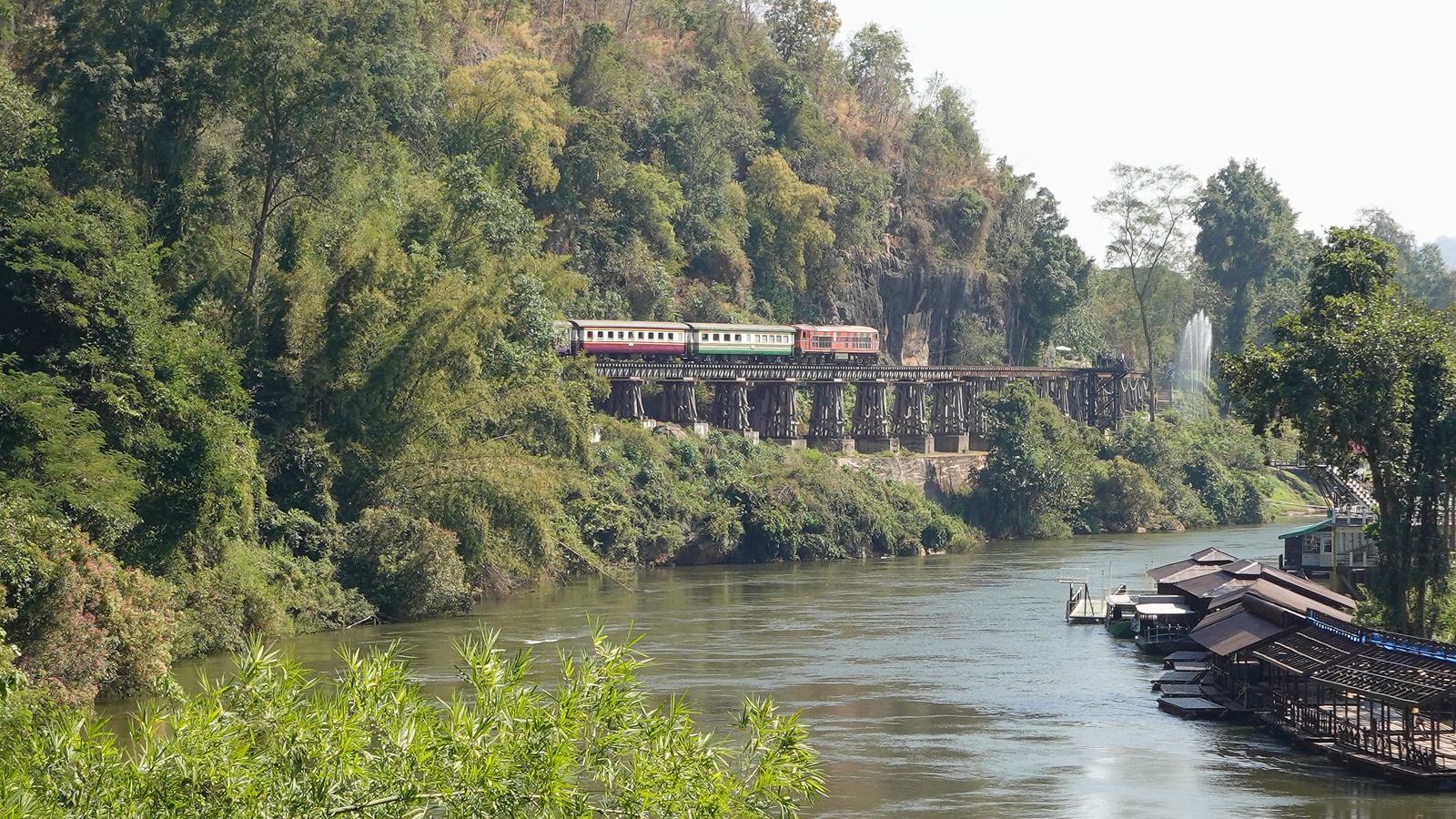
Further south, Tham Krasae offers a particularly striking reading of the line's engineering. Here the rails run along a rock face on a wooden viaduct overlooking the Khwae Noi river, one of the sections still travelled by the trains linking Kanchanaburi to Nam Tok. Landscape and infrastructure make the scale of the works undertaken in this hard-to-reach valley palpable.

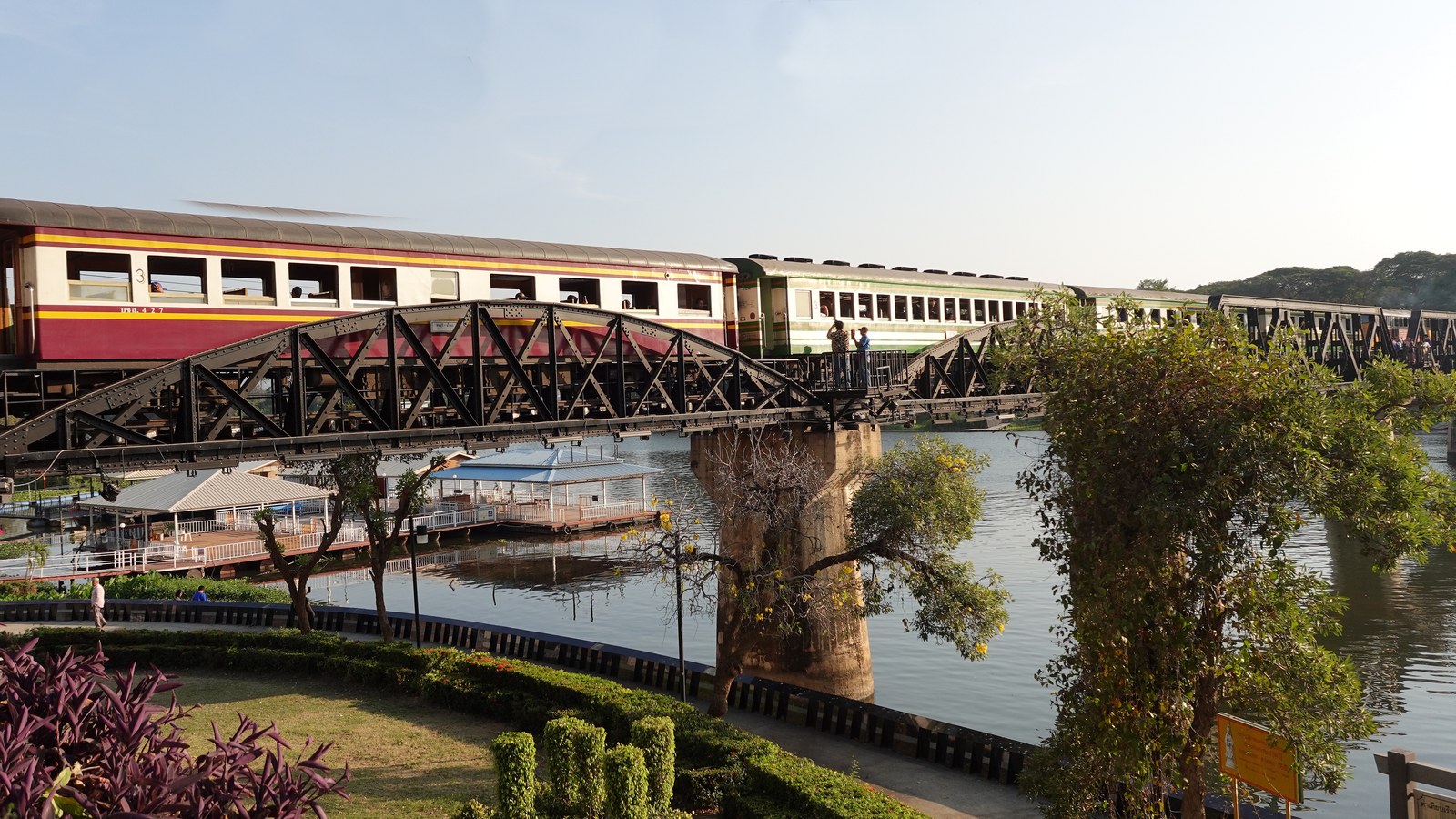
The itinerary then reaches the famous bridge over the River Kwai, which has become one of the international symbols of this history. Beyond its cinematic legacy, the site makes it possible to address the strategic function of the railway, the Allied bombings and the post-war reconstruction.

In the town of Kanchanaburi itself, the Don Rak War Cemetery gathers the graves of several thousand Allied prisoners of war who died during the construction of the line. Nearby, the Thailand–Burma Railway Centre deepens this memory through maps, photographs, archives and testimonies devoted to the working conditions, the camps and the operation of the railway network.

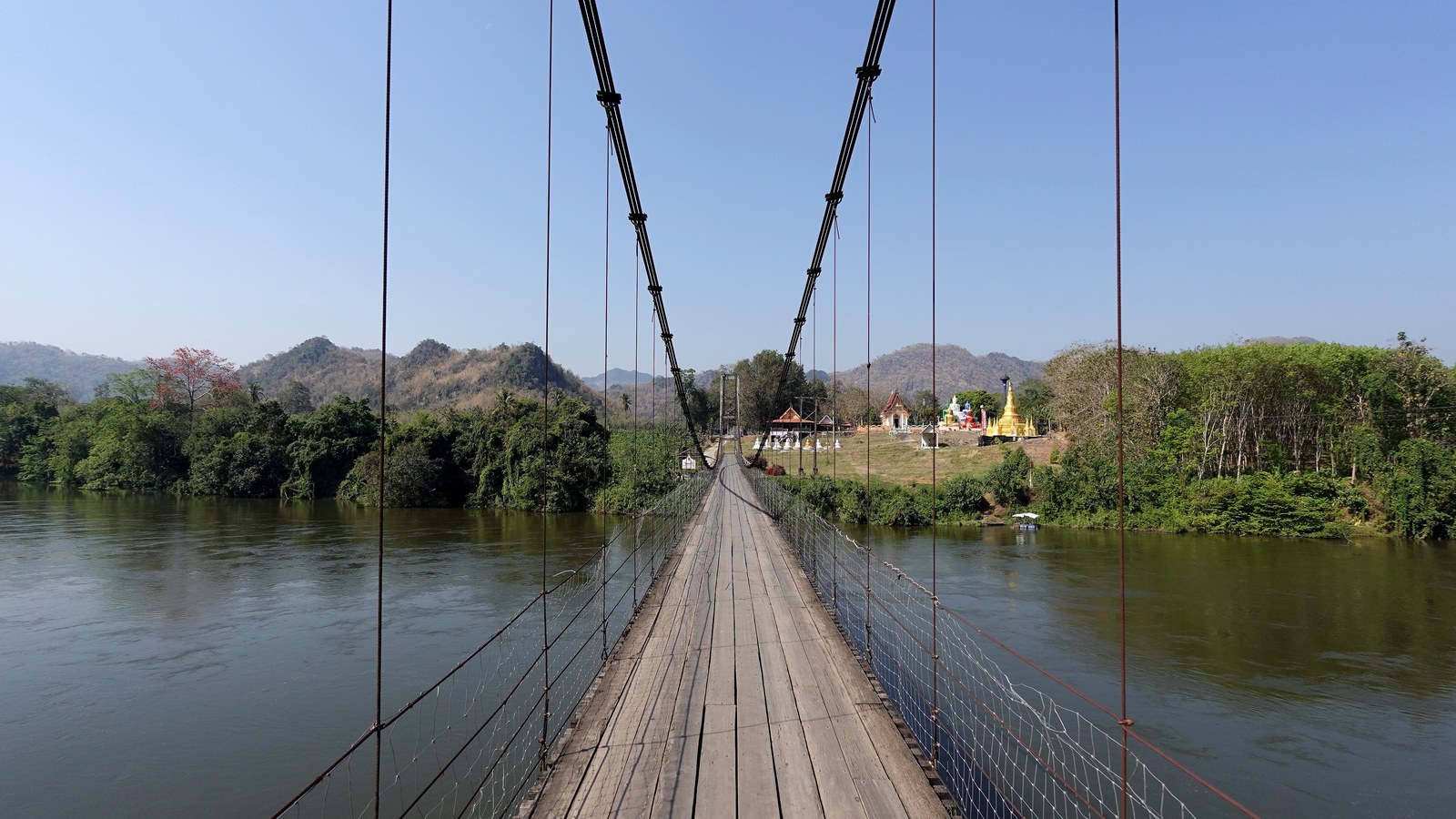
The day ends at the Kanchanaburi Skywalk, a panoramic walkway overlooking the Khwae Yai. From this belvedere, the gaze takes in the meeting of the Khwae Noi and the Khwae Yai, whose waters form the Mae Klong, as well as the river organisation that shaped the history and development of the town.

In the mood for Kanchanaburi?

Let's compose your nature immersion in the west of Siam.