Rock Around Siam
Immersive cultural experiences off the beaten track in Thailand

Immersive experiences

Immersive cultural experiences that mean something

Explore Thailand differently through immersive cultural experiences — private and carefully crafted: living heritage, local communities, know-how, gastronomy and wide-open spaces intertwine to reveal Siam off the beaten track, in all its depth.

Our experiences


In a day or a half-day, immerse yourself in the soul of a single city of Siam: living heritage, neighbourhoods, know-how and encounters, revealed by our specialists, far from the beaten track.

By city
By theme

Historical Heritage

To the origins of Ayutthaya: royal temples, sacred treasures and foreign trading posts at the heart of the former capital of Siam.

This eight-hour day is devoted to the historical heritage of Ayutthaya, former capital of Siam and one of the great political, religious and commercial centres of Southeast Asia. By bicycle, by tuk-tuk and by private vehicle, the itinerary follows a progression designed to understand the formation of the island city, the assertion of royal power, the role of Buddhism and the international openness that shaped its influence over more than four centuries. The geography of the canals, the old circulation routes and the religious ensembles thus serves as a thread for reading the city.

The discovery begins at the Chao Sam Phraya National Museum, whose collections offer essential keys to reading the remains of the ancient city. The exhibition devoted to the golden treasures highlights the pieces recovered during archaeological excavations, while the models, reliquaries and ritual objects convey the spiritual and artistic importance of Ayutthaya's great sanctuaries. The reconstruction of the crypt of Wat Ratchaburana, in particular, helps one better understand the function of relics, votive deposits and painted decoration in the religious architecture of the period.

The itinerary continues through three major monuments of the historical park. Wat Phra Si Sanphet, a former royal temple, recalls the close relationship between monarchy and religion at the heart of the capital. Wat Mahathat, seat of an important monastic community, bears witness to the centrality of Buddhism in the urban and political organisation of the kingdom. Wat Ratchaburana, founded in the 15th century, stands out for its great prang, its decorative remains and the archaeological richness of its crypt.

The afternoon reveals another essential dimension of Ayutthaya: that of a cosmopolitan metropolis connected to the great Asian and European trade networks. The former Japanese and Dutch quarters, today interpreted by the Japanese Village and Baan Hollanda, shed light on the commercial and diplomatic relations maintained with Japan and the United Provinces. The remains of the Portuguese trading post, where excavated burials survive, recall how old the European presence in Siam was.

The French stage finally leads to the Catholic church of Saint Joseph, heir to the mission established in the 17th century on the banks of the Chao Phraya. Its history evokes the relations forged between the Siamese court, the missionaries and the French envoys at a time when Ayutthaya was one of the principal diplomatic crossroads of the region.
Artistic Heritage

Court arts, high-end craftsmanship and architecture under many influences: eight hours at the heart of Ayutthaya's artistic heritage.

This eight-hour day explores the artistic heritage of Ayutthaya through the decorative arts, craftsmanship, architecture and the transmission of know-how. Conceived as a structured cultural journey, the itinerary reveals how these practices shaped — from the royal court to the artisans' workshops — an aesthetic deeply bound to the history of the kingdom and to the cultural identity of Thailand.

The discovery begins at the Sustainable Arts and Crafts Institute of Thailand (SACIT), a leading institution devoted to preserving and promoting Thai arts and crafts. Silks, weavings, decorative objects and regional know-how open a reflection on the continuity between ancient traditions and contemporary creation. This first stage also highlights the decisive role of Queen Sirikit and the SUPPORT Foundation in safeguarding, transmitting and gaining recognition for a craftsmanship long associated with rural communities and court production.

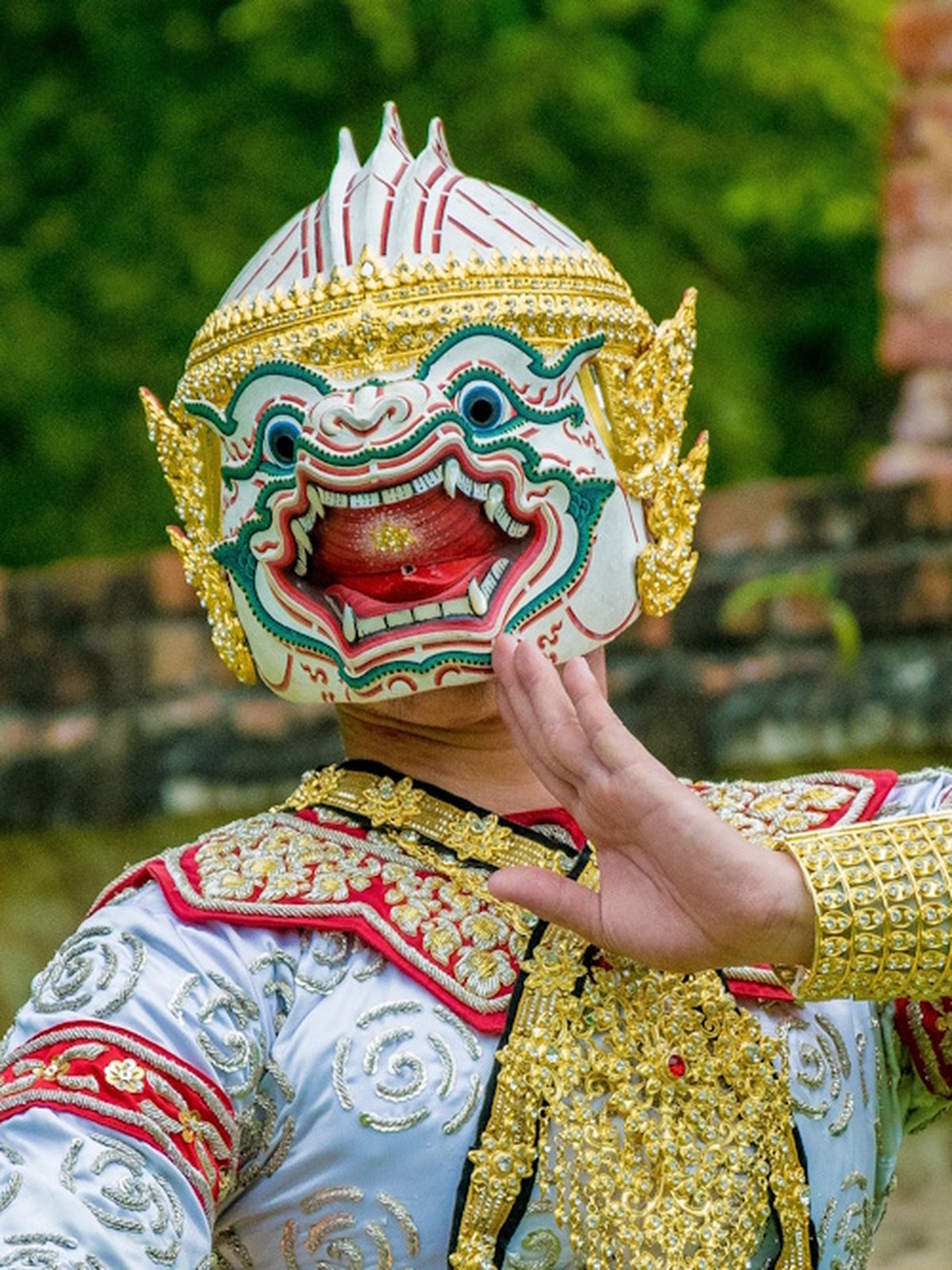
The journey continues at the Khon Learning Center, devoted to khon, the masked dance-drama inscribed on UNESCO's Intangible Cultural Heritage list. Inspired by the Ramakien, the Thai adaptation of the Ramayana, this court art combines codified choreography, music, embroidered costumes, painted masks and symbolic gestures. Discovering it illuminates the close relationship between performance, iconography, craftsmanship and royal culture.

At the Arts of the Kingdom Museum, the experience takes on a more monumental dimension. The works on display, created by highly skilled artisans for the royal family, illustrate the richness of Thai decorative techniques: metalwork, inlay, sculpture, embroidery, lacquer and weaving. Together they convey the degree of precision, patience and sophistication that characterises these creations.

The day continues at Bang Pa-In Palace, a royal residence developed in the 19th century under Rama IV and Rama V. Thai pavilions, Chinese-inspired buildings and European architecture compose a singular landscape, revealing the cultural exchanges and aesthetic transformations of Siam in the modern era.


The day ends with a sunset cruise on the three rivers that encircle the island of Ayutthaya — the Chao Phraya, the Pa Sak and the Lopburi. Paced by the contemplation of three emblematic temples (Wat Phanan Choeng, Wat Phutthaisawan and Wat Chaiwatthanaram), this outing offers a particularly evocative conclusion to a first immersion in the city's artistic heritage.

Diplomatic Heritage

Lopburi in the time of King Narai: Franco-Siamese diplomacy, a royal palace and 17th-century Khmer heritage.

About two hours from Ayutthaya, this eight-hour day by private vehicle explores one of the most fascinating episodes in the diplomatic history of Siam: the rapprochement begun under the reign of King Narai with the France of Louis XIV. A favoured royal residence in the 17th century, Lopburi then became a veritable political laboratory where commercial ambitions, diplomatic strategies, court rivalries and European missionary ventures intersected.

The route begins at the Vichayen House, an architectural complex associated with Constantine Phaulkon, the Greek adviser to King Narai who became one of the principal intermediaries between the Siamese court and the Western powers. Its buildings, where European influence meets Siamese architectural forms, recall the intensity of the exchanges that accompanied the French embassies of 1685 and 1687. Behind the diplomatic ceremony lay many interests: the Siamese wish to diversify alliances in the face of regional and European powers, French commercial ambitions, Catholic missionary projects and the personal strategies of those present at court.

The visit continues at the Somdet Phra Narai National Museum, housed in the former palatial complex of Phra Narai Ratchaniwet. Built from the 1660s, this secondary palace welcomed the sovereign several months a year and was the setting for major diplomatic encounters. The collections make it possible to set these Franco-Siamese relations within a broader history, from the ancient cultures of the region to the political and artistic influence of the kingdom of Ayutthaya.

The year 1688 abruptly marks the end of this phase of openness. Narai's illness and then death, the execution of Phaulkon and Phetracha's rise to power led to the expulsion of the French forces and a profound reorientation of the kingdom's foreign policy. Far from a simple confrontation between Siamese and Europeans, this rupture reveals above all the fragility of the alliances built around the court and the resistance aroused by foreign influence.

The day finally places this diplomatic episode within the long history of Lopburi through Wat Phra Si Rattana Mahathat and Phra Prang Sam Yod. These sanctuaries of Khmer heritage recall that, long before Narai's time, the city already held a strategic position at the heart of the political and religious networks of mainland Southeast Asia.

Rock Around Creative District

Through Bangkok's creative districts, between street art, architecture, design and new uses of the city.

This five-to-eight-hour cultural exploration invites you to discover Bangkok through art, design, architecture and the contemporary transformations of its historic districts. On foot, or by spacious electric tuk-tuk for those with reduced mobility, the itinerary crosses several emblematic areas — Bang Rak, Charoen Krung, Talat Noi, Chinatown, Thon Buri, Phra Nakhon and Pathum Wan — following the banks of the Chao Phraya and certain khlongs that long structured the city's circulation.

The route highlights how these districts, shaped by trade, migration, foreign influences and the long-standing presence of local communities, became major centres of creation in Bangkok. From the murals of the French Embassy to the frescoes of Charoen Krung, Talat Noi and Ong Ang, street art converses with old architecture, converted warehouses, independent galleries and places now devoted to the creative industries.

The stop at the Thailand Creative & Design Center opens a reflection on the role of the creative economy in the capital's transformation, while Warehouse 30, River City Bangkok, The Corner House and the art spaces of IconSiam illustrate different forms of adaptive reuse, cultural programming and staging of contemporary art. Song Wat Road offers another view of this evolution: a former commercial artery of Chinatown, it today combines warehouses, historic shops, cafes, workshops and creative initiatives in an urban fabric that has remained deeply bound to its past.

This reading of Bangkok is not limited to a succession of galleries or frescoes. Each stop sets today's artistic forms within the city's social and urban history, between architectural heritage, the adaptation of old buildings, new cultural practices and the search for forms of expression able to coexist with the political and economic constraints of the metropolis. The experience thus pays particular attention to often-overlooked details: facades, typography, materials, street uses, traces of commerce, artistic interventions and the discreet mutations of the urban landscape.

The route ends at the Bangkok Art and Culture Centre, a major institution of Pathum Wan devoted to visual arts, design, photography, film and contemporary practices. Its exhibitions and open spaces extend this discovery of a creative Bangkok, where heritage, artistic experimentation and new uses of the city continue to echo one another.

Rock Around Bang Krachao

Bang Krachao, the "green lung" of Bangkok, between canals, Mon heritage, temples, biodiversity and sustainable initiatives.

This five-to-eight-hour exploration, on foot or by bicycle, crosses one of the most singular territories of the Bangkok conurbation. Nestled in a vast loop of the Chao Phraya, Bang Krachao forms a semi-rural enclave where canals, gardens, temples, orchards and raised paths compose a landscape radically different from the urban centre. Often nicknamed the "green lung of Bangkok", this territory above all makes it possible to approach the capital through its relationships with water, agriculture, local communities and the contemporary challenges of preservation.

The route begins near Wat Khlong Toei before reaching Bang Krachao and its small paths through dense vegetation. The history of the Mon community, settled in this region from the end of the 18th century, is one of the day's guiding threads. Temples, dwellings, religious practices and the organisation of the villages still bear witness to this heritage, gradually integrated into the social and cultural history of Bangkok.

The itinerary also reveals a territory shaped by the mastery of water. The Lat Pho watergate illustrates the responses to problems of flooding and hydraulic flow in the loop of the Chao Phraya. Nearby, the memorial to the Prince of Chumphon introduces another reading of Thai history, while the agricultural spaces and gardens show how water continues to structure land use.

At Wat Chak Daeng, ecology enters directly into the field of Buddhist practice. The temple runs a programme to collect and recycle plastic bottles, transformed notably into fibres for making monastic robes. The initiative combines waste management, the circular economy and the Buddhist conception of merit, while giving a very concrete dimension to environmental questions.

The route continues between Wat Bang Krasop, Wat Bang Nam Phueng Nai and Wat Bang Nam Phueng Nok, in the heart of a landscape of canals, houses, plantations and small paths. Depending on the chosen itinerary, the discovery may also include the Bang Nam Phueng market, revealing the local economy and nearby production.

Finally, the 80th Anniversary Botanical Gardens and then Sri Nakhon Khuean Khan make it possible to observe the plant diversity of this peninsula and the efforts made to preserve its wetlands, its fragile mangroves and its ecological balances. Agroforestry, small-scale farming, flood management and principles inspired by the Sufficiency Economy reveal here another way of inhabiting Bangkok, between urban pressure and the maintenance of a living territory.

Rock Around Rattanakosin

Rattanakosin, from the royal citadel of 1782 to the historic districts that shaped contemporary Bangkok.

This five-or-eight-hour historical exploration, on foot or by electric tuk-tuk for those with reduced mobility, travels through the old heart of Bangkok to understand its founding, its defensive organisation and its successive transformations. The itinerary reads Rattanakosin as a territory to decipher: its fortifications, canals, sanctuaries, monuments and districts recount how a new Siamese capital was conceived after the destruction of Ayutthaya in 1767.

The route takes as its guiding thread one of the major preoccupations of the first decades of the Chakri dynasty: protecting the new centre of the kingdom against a further Burmese offensive. When General Chakri, who became Rama I, moved the capital to the eastern bank of the Chao Phraya in 1782, Rattanakosin was conceived as a fortified city, largely inspired by the island geography of Ayutthaya. The river and the canals then played the role of natural defences, complemented by walls, gates, bastions and artillery batteries.

From Mahakan Fort to Phra Sumen Fort, among the rare vestiges of the old fortifications, the walk gradually restores this geography of power. The Uthokthan shrine, Wat Ratchabophit and Sao Ching Cha make it possible to approach the relationships between monarchy, Buddhism and Brahmanic traditions, while the monument dedicated to Rama I sets the birth of Rattanakosin within the political project of rebuilding Siam carried by the new dynasty.

Crossing the Chao Phraya via the Sky Park opens another perspective on the capital's development and leads to Kudi Chin, a historic community of Thonburi shaped by several centuries of coexistence between Thai, Portuguese, Chinese and Muslim populations. The Rajinee viewpoint then places the river back at the centre of the urban reading: a route of circulation, a natural boundary, a commercial axis and a decisive element in the organisation of the two banks of Bangkok.

The itinerary thus follows the evolution of the capital from the fortified royal city of the late 18th century to its gradual opening, the partial erasure of its walls, the urban modernisation undertaken in the 19th and 20th centuries and the end of the absolute monarchy in 1932. Architecture, infrastructure, religious and political power make it possible to understand how Rattanakosin gradually became part of an expanding metropolis, at the heart of the cultural itineraries and private stays devoted to the heritage of Thailand.

The discovery ends at Wat Saket, whose Golden Mount dominates the old urban fabric and offers a particularly clear reading of the historical topography of Rattanakosin, between temples, canals, old districts and contemporary axes.

Bangkok in Three Dimensions

Bangkok by land, water and air: a sensory reading of the city, its history and its impermanence.

Bangkok in Three Dimensions is a sensory allegory in which each of the three elements introduces a particular way of entering the city and reading its depth. Earth refers to rootedness, to matter, to built forms and to the lasting traces inscribed in the urban fabric. Water evokes flows, circulation and exchange, but also the founding role of the river network in the rise and identity of Bangkok. Air, finally, widens the gaze, changes the scale of perception and reveals, at sunset, a city grasped in its expanse, its verticality and its lines of force.

This reading through the elements resonates with Buddhist thought, in which earth, water, air and fire are among the fundamental constituents of matter. Here, fire is not treated as an autonomous sequence: it surfaces in the light of the setting sun, which accompanies the final stage and introduces the notion of impermanence, anicca in Pali, one of the three characteristics of existence in Buddhism.

The first sequence of the day, devoted to Earth, travels by electric tuk-tuk through six historic districts of Bangkok: Bang Rak, Talat Noi, Thon Buri, Phra Nakhon, Dusit and Chinatown. Over nearly four hours, the route puts into perspective the built forms, the logics of urbanisation and the architectural influences that shaped the capital, while underlining the contribution of the Chinese, European, Muslim, Mon and Siamese communities to its development.

The second sequence, dedicated to Water, takes place aboard a mahogany motor launch. Between the Krungthep Bridge to the south and the Rama VIII Bridge to the north, two hours of navigation set Bangkok back within its river matrix. The Chao Phraya appears as the axis around which exchanges, human settlements, districts, palaces and infrastructure were organised, from the origins of Bang Makok to the rise of Rattanakosin.

The third sequence rises above the city. A helicopter flight at sunset reveals Bangkok in its expanse, its contrasts and its dynamics of transformation. From the air, temples, river, historic districts, road axes, towers and infrastructure compose a landscape in constant recomposition, where the apparent permanence of the monuments converses with the changing character of the metropolis.

This eight-hour experience combines an electric tuk-tuk ride, navigation and a panoramic flight to approach Bangkok as a living territory, shaped by time, beliefs, water, exchange and the continuous transformation of its urban forms.

Iconic Bangkok

From Thonburi to Rattanakosin: royal temples, the Grand Palace and the arts of Siam at the heart of historic Bangkok.

This six-hour cultural walk explores the historical, religious and symbolic foundations of Bangkok through four major sites. From Thonburi to Rattanakosin, the itinerary sets the capital's emblematic monuments within the history of the Chakri dynasty, the Siamese monarchy and Theravada Buddhism, to offer a deeper and more contextualised reading of historic Bangkok.

The route begins at Wat Arun, on the western bank of the Chao Phraya. Heir to an older sanctuary from the Ayutthaya period, the temple took on particular importance at the end of the 18th century, when King Taksin made Thonburi his centre of power. Its great central prang, developed under the first Chakri sovereigns, combines Buddhist cosmology, monumental architecture and the assertion of royal authority.

After crossing the river, Wat Pho reveals another facet of the capital. Restored under Rama I and then considerably enlarged under Rama III, this royal monastery became an important place for the transmission of religious, medical and literary knowledge. The inscriptions carved in stone bear witness to this encyclopaedic ambition. The famous Reclining Buddha, some forty-six metres long, represents the Buddha's entry into parinirvana and remains one of the most striking images of Thai religious art.

The itinerary then reaches the Grand Palace and Wat Phra Kaew, founded in 1782 when Rama I established Bangkok as the new capital of the kingdom. The Temple of the Emerald Buddha, a palatine chapel with no permanent monastic community, houses the most venerated sacred image in Thailand. Around it, the Phra Si Rattana Chedi, the Phra Mondop, the Royal Pantheon and the frescoes of the Ramakien compose an ensemble where religion, mythology, the arts and dynastic legitimacy meet.

The discovery continues through the great ceremonial buildings of the palace, notably the Chakri Maha Prasat Hall, the Dusit Maha Prasat Hall, the Amarindra Vinichai Hall, the Paisal Taksin Hall and the Chakraphat Phiman Hall. Their organisation makes it possible to better understand the political, residential and ritual functions of this former royal enclosure, long at the heart of Siamese power.

The route ends at the Queen Sirikit Museum of Textiles, housed in the Ratsadakorn-bhibhathana Building, erected under Rama V. Its collections shed light on the history of Thai textiles, court fabrics, regional know-how and the role played, under the patronage of Queen Sirikit, in their preservation and renewal.

Bangkok by Night

Bangkok from dusk to deep night, from the banks of the Chao Phraya to the neon of Chinatown and the jazz clubs.

This private six-hour walk explores Bangkok in the gradual passage from dusk to night, when the city changes rhythm, light and atmosphere. Entirely adaptable to the mood of the moment, it combines urban history, working-class districts, gastronomy, markets and places of conviviality to discover the Thai capital in a perspective at once cultural and resolutely alive.

The evening begins on the banks of the Chao Phraya over an aperitif, as the sun disappears behind the silhouette of Wat Arun. At this particular hour, the river regains its full presence in the Bangkok landscape: a route of circulation, a historic boundary and the founding axis around which Thonburi and then Rattanakosin developed.

The walk then reaches Pak Khlong Talat, the capital's great flower market, whose nocturnal activity reveals a world of jasmine garlands, lotus, orchids and offerings destined for temples as well as everyday use. The route continues towards the Ong Ang canal and Saphan Han, at the edge of the old merchant districts where Chinese, Siamese communities and traders from elsewhere helped shape Bangkok from the end of the 18th century.

As night settles in, the itinerary enters Sampheng, a narrow historic artery of Chinatown. This merchant district, developed after the settlement of the Chinese community east of the new royal enclosure of Rattanakosin, retains a singular urban density made of shops, warehouses, narrow passages, shrines and merchant houses.

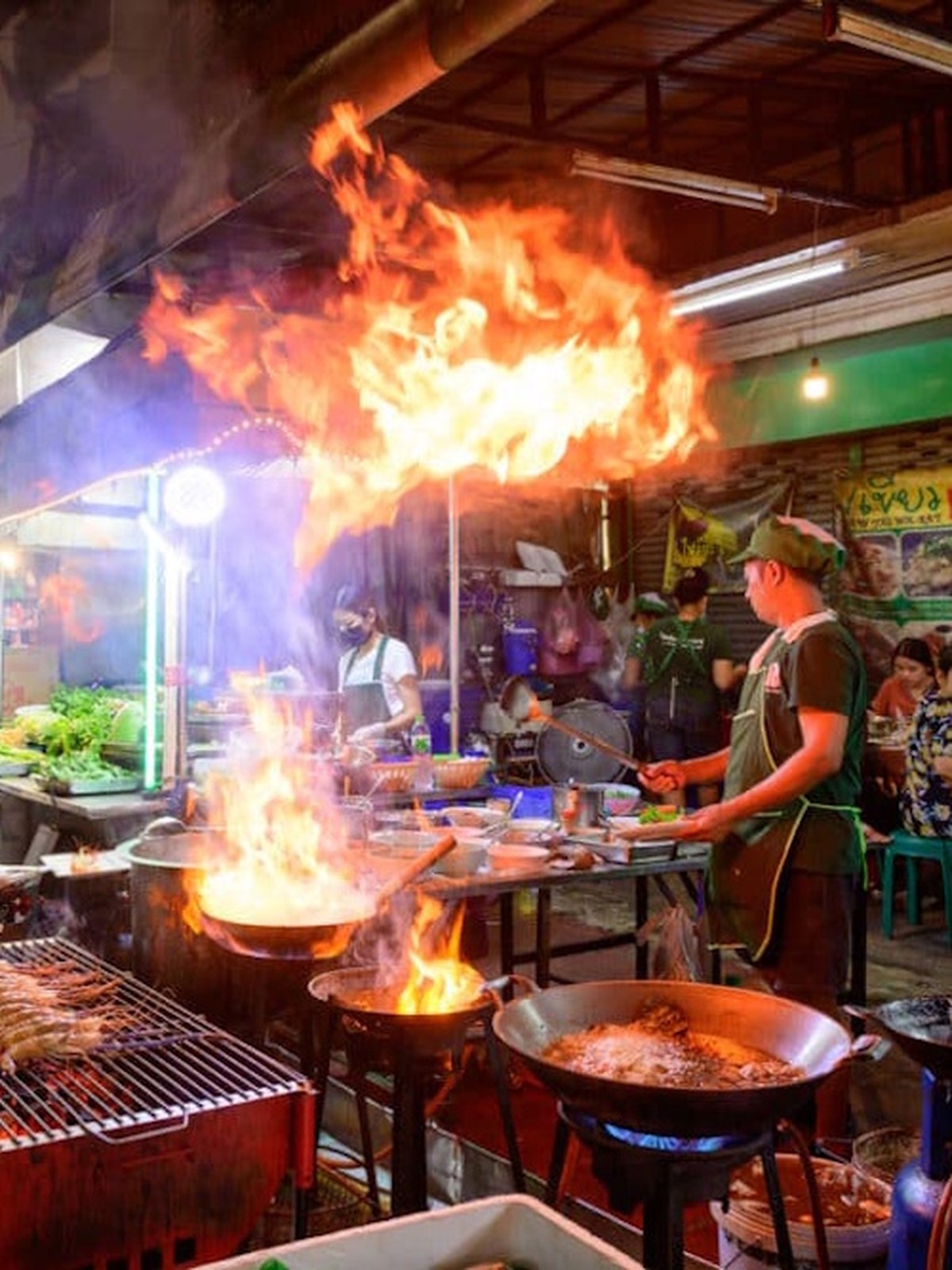
The stroll then reaches Yaowarat Road, where illuminated signs, open kitchens and continuous traffic compose one of the most characteristic nocturnal landscapes of Bangkok. Dinner is taken at a street-food address chosen for the quality of its produce and its atmosphere: a wok heated to full flame, tables set directly on the pavement and specialities prepared a few metres from the guests.

The evening may continue freely according to preference: a hidden bar, crafted cocktails or a jazz club. In an intimate room frequented as much by music lovers as by Bangkok's night owls, musicians, jazz standards and classic cocktails accompany the last hours of the night.

Bangkok a la carte

A fully personalised itinerary, shaped to your wishes, between districts, heritage and local life.

This private five-or-eight-hour experience offers a deeply personal way of exploring Bangkok, on foot or by bicycle, according to the districts, the distances and the desired pace. Entirely customisable, it is built around the traveller's interests, curiosities and wishes of the moment, with the possibility of adapting the route before departure as well as over the course of the day.

Rather than a predefined itinerary, the discovery rests on a flexible framework allowing you to approach Bangkok from very different angles: historical heritage, Buddhist temples, architecture, old communities, creative districts, markets, craftsmanship, gastronomy, contemporary art or urban transformations. Some will prefer to follow the traces of the former capital of Thonburi and the first Chakri sovereigns; others to explore the lanes of Chinatown, the communities settled along the khlongs, the multicultural legacies of Bang Rak or the more confidential spaces of the contemporary city.

This freedom also makes it possible to vary the scales. A morning may linger over a few major monuments to understand their history and symbols, then drift towards a neighbourhood market, an artisan's workshop, an old house or an address chosen for its cuisine. Conversely, the experience may favour a more transversal reading of Bangkok, linking several territories to observe how the river, the canals, migration, trade and the different communities shaped the capital.

The presence of an English-speaking companion long established in Bangkok gives this exploration a more embodied dimension. Beyond the historical landmarks, they share the uses of the city, its transformations, its contrasts and certain addresses barely visible from conventional itineraries. Conversation, observations and encounters thus become an essential component of the day.

The route deliberately remains open: a street draws attention, a temple deserves more time, an exhibition, a cafe or a market invites a stop, and the itinerary can evolve accordingly. This flexibility offers an approach particularly suited to travellers seeking private cultural experiences in Thailand, with the freedom to compose their own reading of Bangkok, from its historic districts to its local communities.

Spirituality of the great natural landscapes

Temples, caves and ancient legacies along the rice fields, mountains and rivers of Kanchanaburi.

This first eight-hour day by private vehicle explores one of the most striking faces of Kanchanaburi: a land where temples, rice fields, karst reliefs and ancient remains compose a deeply spiritual geography. The journey begins at Wat Tham Suea, dominated by the Phra Chedi Kesa Kaew Prasat, whose decorations evoke the lives of the Buddha, the history of the Siamese sovereigns and the conflicts that long set Siam against the Burmese kingdoms. In this province, set on one of the great axes linking Burma to the central plain, not far from the historic route of the Three Pagodas Pass, these stories take on a particular resonance.

Nearby, Wat Tham Khao Noi introduces a different architectural language and extends this reading of the sacred landscape. From the heights, the gaze takes in the rice plain of Tha Muang, the meanders of the watercourses and the mountains closing the horizon. Below, Meena Cafe offers a singular stop amid the rice fields, reached by a long wooden walkway crossing the crops: a way of slowing down and observing the intimate relationship that here binds farming, reliefs and watercourses.

The itinerary then reaches Wat Ban Tham, known for its spectacular staircase passing through the monumental mouth of a dragon before leading to the sanctuary and the cavities of the hill. The ascent combines Buddhist iconography, vernacular architecture and a physical experience of the relief. Further on, Birds Caves Wall and then Man Wijit Cave introduce a more mineral and contemplative dimension, between limestone walls, vegetation and natural cavities, in a part of Kanchanaburi still largely shaped by geology.

Lunch is served at THREE Boundary, in Khao Noi, in a setting that extends this immersion in the Kanchanaburi countryside. The afternoon is devoted to the Mueang Sing Historical Park, a former fortified settlement marked by Khmer cultural and architectural influence. Laterite sanctuaries, the enclosure and the organisation of the site make it possible to evoke the political, religious and commercial movements that once linked western Siam to the great networks of mainland Southeast Asia.

The day ends on the River Kwai, at the FloatHouse River Kwai Resort, in the heart of the Sai Yok valley. Set directly on the water, the floating villas accompany the shift to another rhythm: dinner by the river, wooded mountains in the background and a night carried by the movement of the current.

War memories in the heart of nature

From the gorges of Hellfire Pass to the bridge over the River Kwai, on the trail of the Death Railway in Kanchanaburi.

This eight-hour day explores one of the most striking chapters of Thailand's contemporary history, in the landscapes of rivers, forests and reliefs that surround Kanchanaburi. Between private navigation, road and railway, the itinerary follows several major sites linked to the construction of the Thailand–Burma line during the Second World War, while setting this memory within the spectacular geography of the Kwai valley.

The day begins on the water with a trip up the river by private speed-boat to the vicinity of Ban Hat Ngio. This first crossing reveals Kanchanaburi from its river network, between wooded banks, limestone reliefs and villages established along the water, before reaching Hellfire Pass by road.

The Hellfire Pass Interpretive Centre introduces the history of the railway built between 1942 and 1943 by the Japanese army to link Thailand to Burma. Allied prisoners of war and tens of thousands of Asian labourers were mobilised in extremely harsh conditions to open this line through mountains and jungle. The memorial route continues at Konyu Cutting, a deep trench carved straight into the rock. Night work by torchlight gave the site its nickname of "Hellfire Pass".

Further south, Tham Krasae offers a particularly striking reading of the line's engineering. Here the rails run along a rock face on a wooden viaduct overlooking the Khwae Noi river, one of the sections still travelled by the trains linking Kanchanaburi to Nam Tok. Landscape and infrastructure make the scale of the works undertaken in this hard-to-reach valley palpable.

The itinerary then reaches the famous bridge over the River Kwai, which has become one of the international symbols of this history. Beyond its cinematic legacy, the site makes it possible to address the strategic function of the railway, the Allied bombings and the post-war reconstruction.

In the town of Kanchanaburi itself, the Don Rak War Cemetery gathers the graves of several thousand Allied prisoners of war who died during the construction of the line. Nearby, the Thailand–Burma Railway Centre deepens this memory through maps, photographs, archives and testimonies devoted to the working conditions, the camps and the operation of the railway network.

The day ends at the Kanchanaburi Skywalk, a panoramic walkway overlooking the Khwae Yai. From this belvedere, the gaze takes in the meeting of the Khwae Noi and the Khwae Yai, whose waters form the Mae Klong, as well as the river organisation that shaped the history and development of the town.

Over several days and several cities, a cultural thread links regions, heritage and communities: a rare, deep and continuous immersion at the heart of Siam, designed to go further.

By region
By theme

Udon Thani (Stage 1/3)

From Buddhist forests to red lotuses and Ban Chiang: two days at the heart of the landscapes and memories of Udon Thani.

This first stage (of three), lasting two days in the province of Udon Thani, opens the journey onto three essential dimensions of Isan: Buddhist spirituality, the breadth of the rural landscapes and the archaeological depth of a land inhabited for millennia. Between a forest sanctuary, a vast lotus-covered lake and prehistoric remains, the itinerary composes a sensitive introduction to this northeastern region of Thailand, still spared the great tourist flows.

The discovery begins at the Buddhist complex of Phra Dhamma Visuddhimongkol, linked to the Thai tradition of forest Buddhism. Set in a peaceful environment, the site opens a reflection on a form of spirituality founded on meditation, asceticism and withdrawal from the world, deeply rooted in the religious history of Isan. The architecture, the spaces of contemplation and the close relationship between monastery and nature offer a first reading of the place of Buddhism in the landscapes and rural communities of the region.

The road then reaches the shores of Nong Han Kumphawapi lake, better known as the Red Lotus Lake. A nearby guesthouse makes it possible to extend the experience to the rhythm of the village, the fishermen and the surrounding countryside. Depending on the time of arrival, the end of the day lends itself to a first exploration of the banks and the farmland, before dinner at the guesthouse table.

At dawn, a boat glides across the lake as thousands of red lotuses open to the morning light. Beyond its seasonal beauty, the site reveals a living lake ecosystem, dotted with fishing grounds, birds and communities long established on its banks.

The itinerary continues at Ban Chiang, one of Thailand's major archaeological sites, a UNESCO World Heritage Site since 1992. The discoveries made in this region profoundly renewed our knowledge of the prehistoric societies of mainland Southeast Asia. Burials, tools, metal objects and the famous painted ceramics bear witness to ancient farming communities, their techniques and their funerary practices.

At the end of the day, the road continues towards Sakon Nakhon, across farmland, villages and the open landscapes characteristic of Isan. An overnight stop in a resort with a singular setting marks the transition before continuing further east.

Sakon Nakhon (Stage 2/3)

Sakon Nakhon, between indigo, Khmer sanctuaries, Catholic heritage and the great landscapes of Isan.

This second stage (of three), three days and two nights, crosses the province of Sakon Nakhon at a deliberately slow pace, in the heart of a rural Isan where artisan know-how, religious legacies and great landscapes compose a singular identity. Between workshops, sanctuaries, villages and natural spaces, the itinerary brings to light a region still largely untouched by conventional circuits, shaped by living traditions and successive cultural influences. Travel is by private vehicle, to preserve the flexibility of the journey.

The discovery begins with indigo, one of the most emblematic markers of Sakon Nakhon's textile heritage. At the Ban Don Koi Indigo Centre, Vilamas Ranch and Mann Gardens, visits and workshops bring you close to the gestures of natural dyeing, the preparation of pigments, the working of fibres and the evolution of traditional motifs towards contemporary creations. This textile culture also belongs to the broader history of the promotion of Thai craftsmanship, encouraged in the 20th century under the patronage of Queen Sirikit. At the Onson distillery, the journey opens onto another expression of the land, based on transforming local agricultural resources into artisanal spirits.

The itinerary then reveals the historical and spiritual depth of the province. The sanctuaries of Phra That Narai Cheng Weng and Phra That Phu Phek bear witness to the ancient Khmer presence in this part of northeastern Thailand and recall the cultural exchanges that once linked the Mekong basin to the great centres of the Khmer Empire. At Wat Phra Phuttha Saiyaram and then Wat Phra That Choeng Chum Worawihan, Theravada Buddhism takes over through places of worship deeply bound to local religious memory.

At Tha Rae, the story shifts register. This Catholic community, partly descended from Vietnamese migrations and marked by French missionary work, preserves an original identity perceptible in its built heritage, its religious buildings and certain old dwellings. This Christian presence, rare on such a scale in Isan, adds a singular dimension to the cultural reading of Sakon Nakhon.

Finally, the journey gives ample place to the province's wide-open spaces. The Kasetsart University Lotus Park and the shores of Nong Han lake offer a breathing space between visits, in a landscape of wetlands, aquatic vegetation and open horizons that is fully part of the identity of Sakon Nakhon.

Nakhon Phanom (Stage 3/3)

Nakhon Phanom, two days between the Mekong, Indochinese legacies, Vietnamese memories and the spiritualities of Isan.

The final stage of a seven-day cultural itinerary across Isan, this two-day immersion leads to Nakhon Phanom, on the banks of the Mekong, facing Thakhek in Laos. After Udon Thani and Sakon Nakhon, the journey here reaches a border territory where Siamese memory, Indochinese influences, Vietnamese presence and religious traditions deeply rooted in local life intersect.

Nakhon Phanom is first discovered in the slowness of its river landscape. A bicycle ride along the Mekong makes it possible to read the town's evolution through its quays, its old houses and several administrative buildings inherited from the modernisation of Siam. From the former Governors' Residence to the former provincial court and the National Library, the architecture tells of a town long turned towards cross-border exchanges, while Thakhek, on the opposite bank, recalls the historic proximity of French Indochina. In the old centre, certain facades and merchant houses extend this singular atmosphere, born of the movement of people, goods and architectural styles along the river.

The Vietnamese presence forms another thread of the stage. Settled in successive waves at the end of the 19th and the beginning of the 20th century, these communities lastingly shaped the cuisine, the religious practices and the urban memory. The Thai-Vietnamese commemorative Clock Tower evokes this shared history, while the house associated with Ho Chi Minh's stay opens a reflection on the political and human movements that crossed the region in the 20th century. This memory can also be read in a local cuisine where Thai, Lao and Vietnamese influences compose an identity particular to the towns of the Mekong.

The spiritual dimension is revealed in the diversity of places of worship. Saint Anne's Catholic church of Nong Saeng and Saint Joseph's parish of Samat bear witness to the rootedness of Christianity within the Vietnamese communities of the Mekong. A few dozen kilometres away, Wat Phra That Phanom is one of the great Buddhist poles of northeastern Thailand. Its stupa, deeply bound to the religious traditions of Isan and Laos, has for centuries drawn pilgrims and the faithful from both banks.

The final sequence reaches the house where Ho Chi Minh stayed, a place of memory devoted to his passage through the region and to the historic links between the Vietnamese communities and northeastern Thailand, before the private-vehicle transfer to the airport and departure for the next destination.

Going further


Immerse yourself further in Siam

Beyond our tours and itineraries, we imagine a multitude of experiences to live with your own hands: cooking classes, craft workshops, initiations and encounters. So many intimate gateways to the living culture of Siam, composed according to your wishes.

Through the seasons, Thailand blazes with festivals: lights on the water, rockets into the sky, processions and masks — so many occasions where popular fervour becomes living spectacle.

Phi Ta Khon Festival — immersive cultural experience in Thailand with Rock Around Siam.

Phi Ta Khon Festival

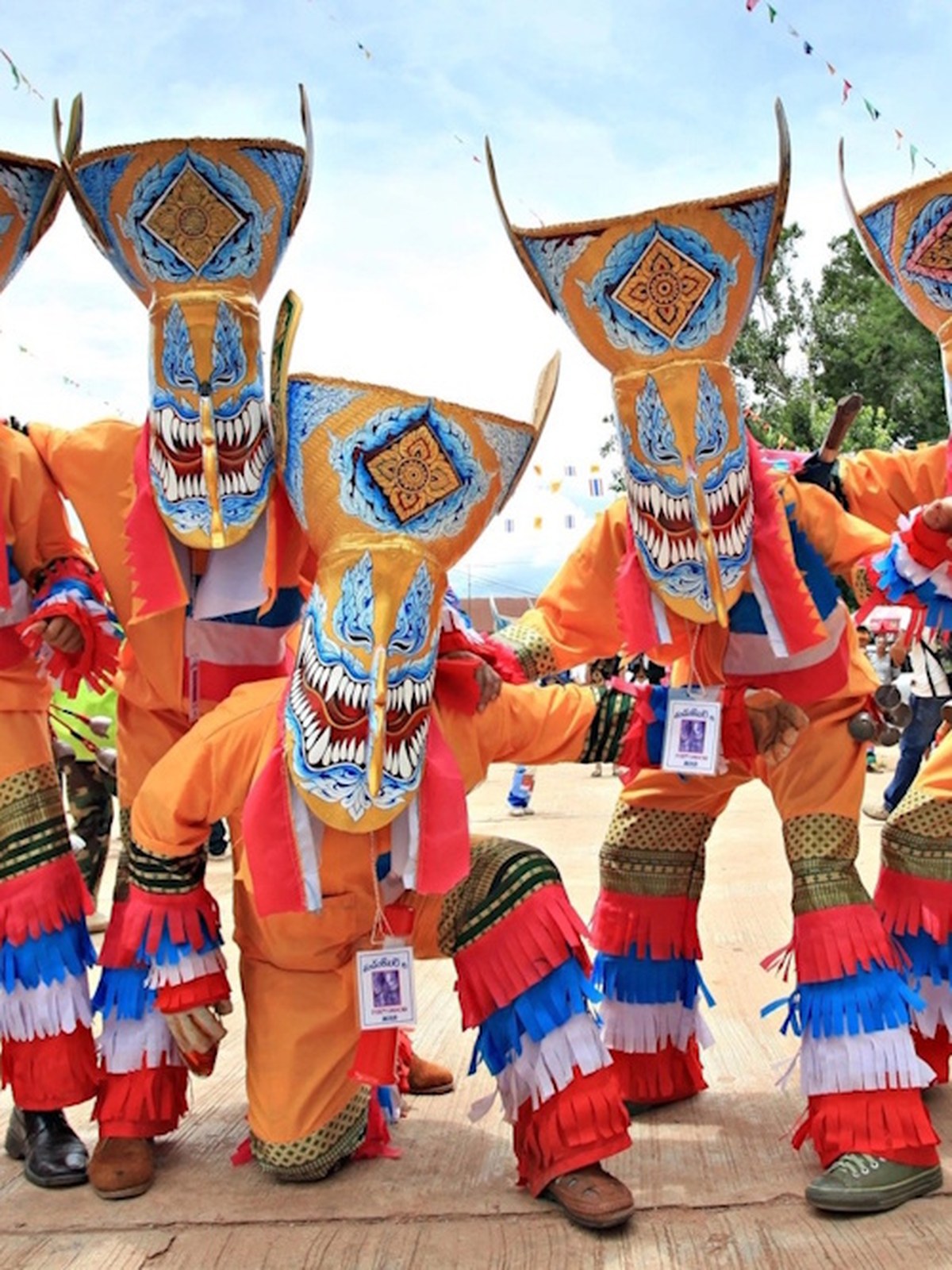
In Dan Sai, in Loei province in the North, the Phi Ta Khon is one of the most singular festivals in Thailand. Part of the Bun Luang, a great merit celebration, it combines Buddhist traditions, local beliefs and the imagery of spirits. Its processions are famous for their spectacular masks and colourful costumes — once darker, now vivid. Made from simple materials — bamboo rice baskets, coconut elements and softwood — they bear witness to a communal craft. The festival is often linked to the return of Prince Vessantara, welcomed by a jubilation said to have awakened the dead. Between fervour, visual satire and territorial identity, the Phi Ta Khon reveals a rare facet of the ritual world of Isan.

Bun Bang Fai Festival — immersive cultural experience in Thailand with Rock Around Siam.

Bun Bang Fai Festival

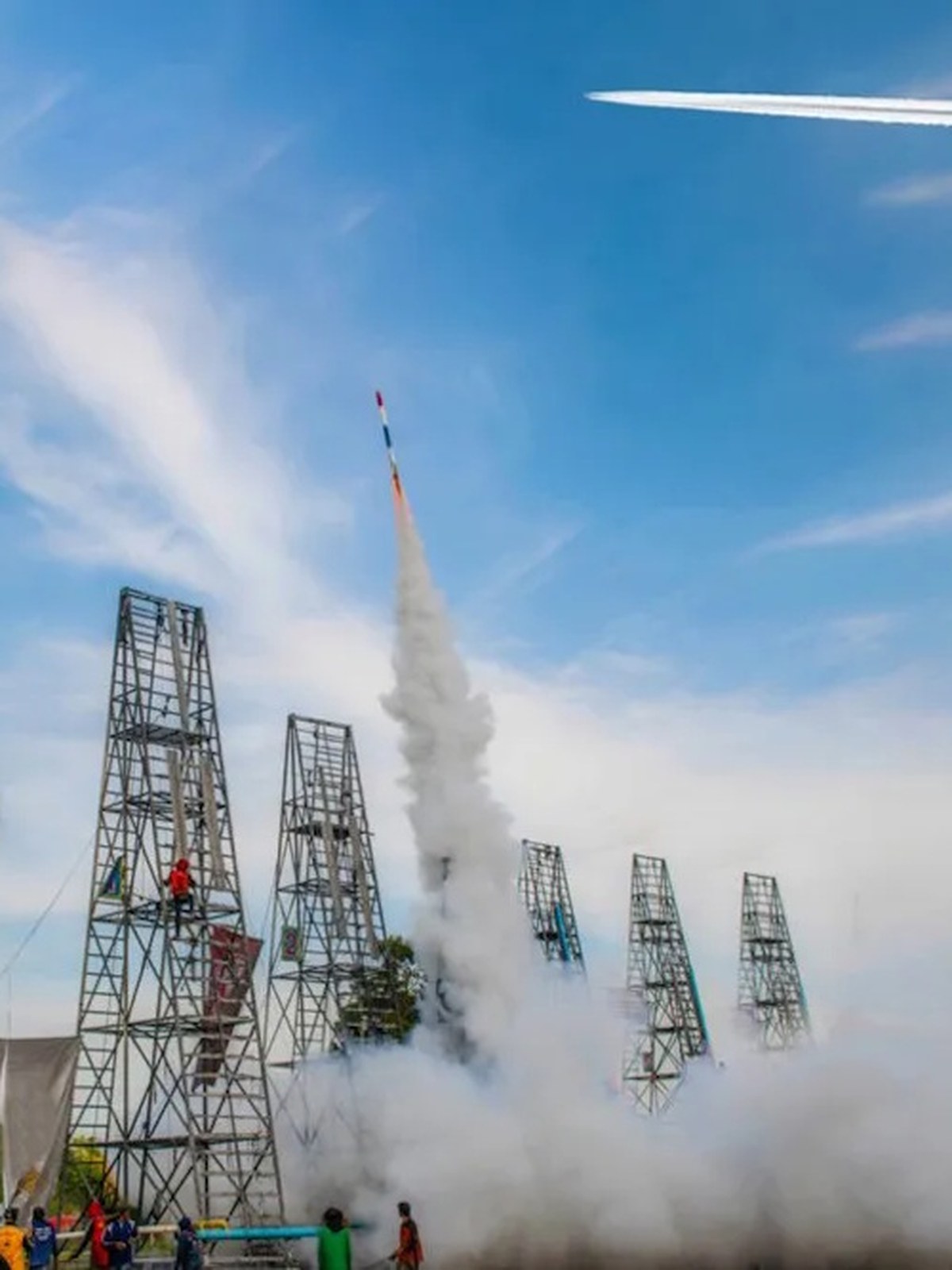
Bun Bang Fai, the rocket festival, is one of the great and colourful traditions of Isan, celebrated as the monsoon approaches, notably in Yasothon. Inherited from ancient agrarian fertility rites, this festival invokes the rain and reminds Phaya Thaen, a celestial deity, of his promise to nourish the rice fields. Now part of the Buddhist calendar and village life, it combines the making of handcrafted rockets, processions, music, dances and contests, before the spectacular launches. Behind the effervescence lies a whole reading of rural Thai life: dependence on the seasons, popular beliefs, collective ingenuity and the strength of community bonds all come together in a ritual where humour, creativity and spirituality accompany the wait for rain.

Ubon Candle Festival — immersive cultural experience in Thailand with Rock Around Siam.

Ubon Candle Festival

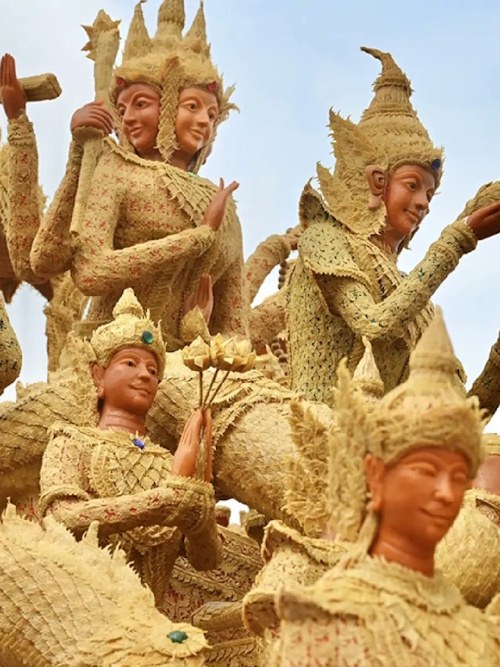
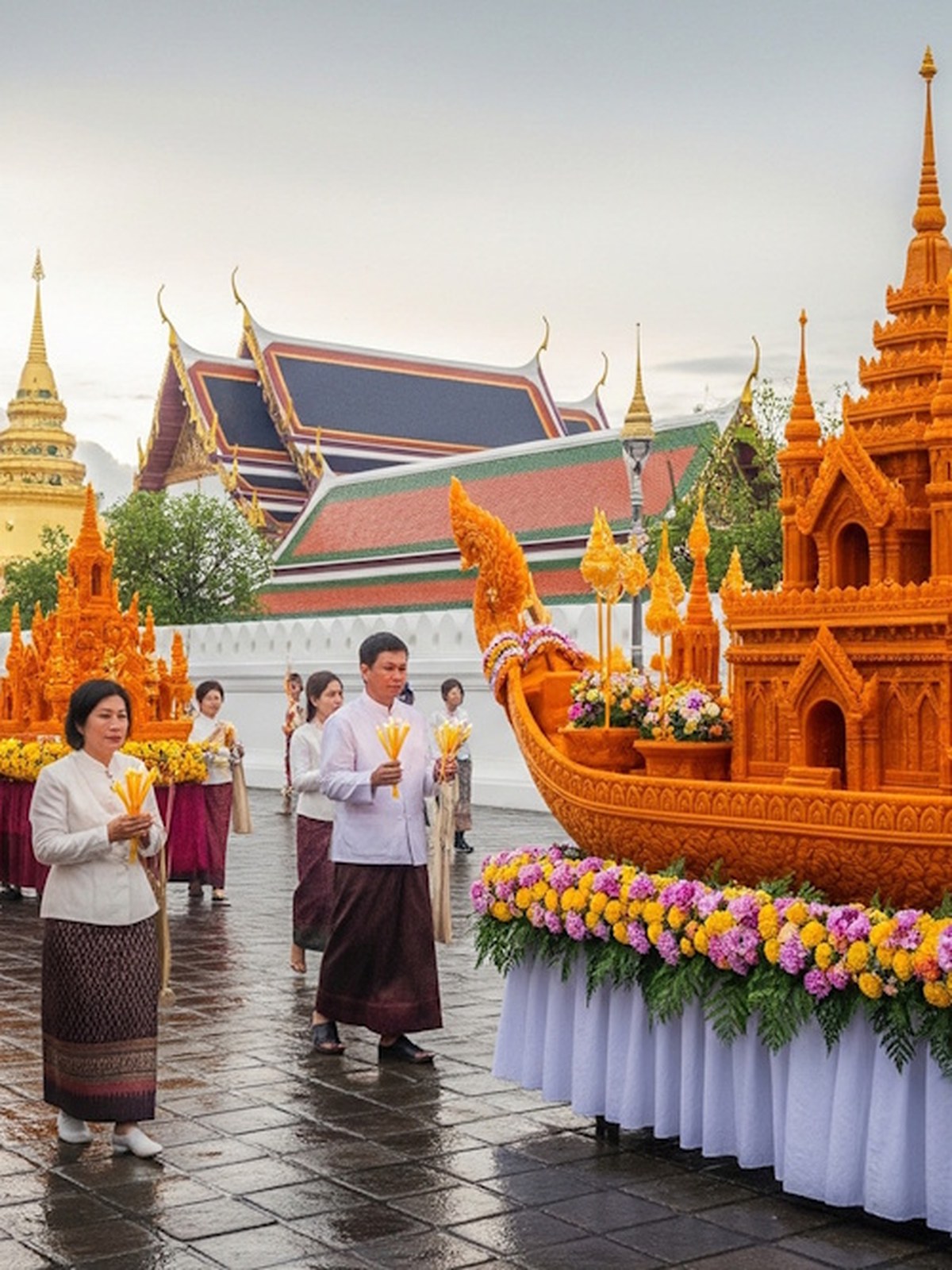
In Ubon Ratchathani, the candle festival is one of the Buddhist celebrations of northeastern Thailand. Organised around Asalha Bucha and Khao Phansa, it recalls the Buddha's first sermon and the monks' entry into the rains retreat. In the past, the faithful offered temples simple candles to light monastic studies during these three months. The tradition gave rise to a spectacular art: immense, finely carved wax sculptures take their place on processional floats surrounded by musicians and dancers. In Ubon Ratchathani, this practice reaches an exceptional scale, blending religious fervour, artisanal virtuosity, visual culture and regional pride, in an ephemeral celebration rooted in the identity of Isan.

Loy Krathong Festival — immersive cultural experience in Thailand with Rock Around Siam.

Loy Krathong Festival

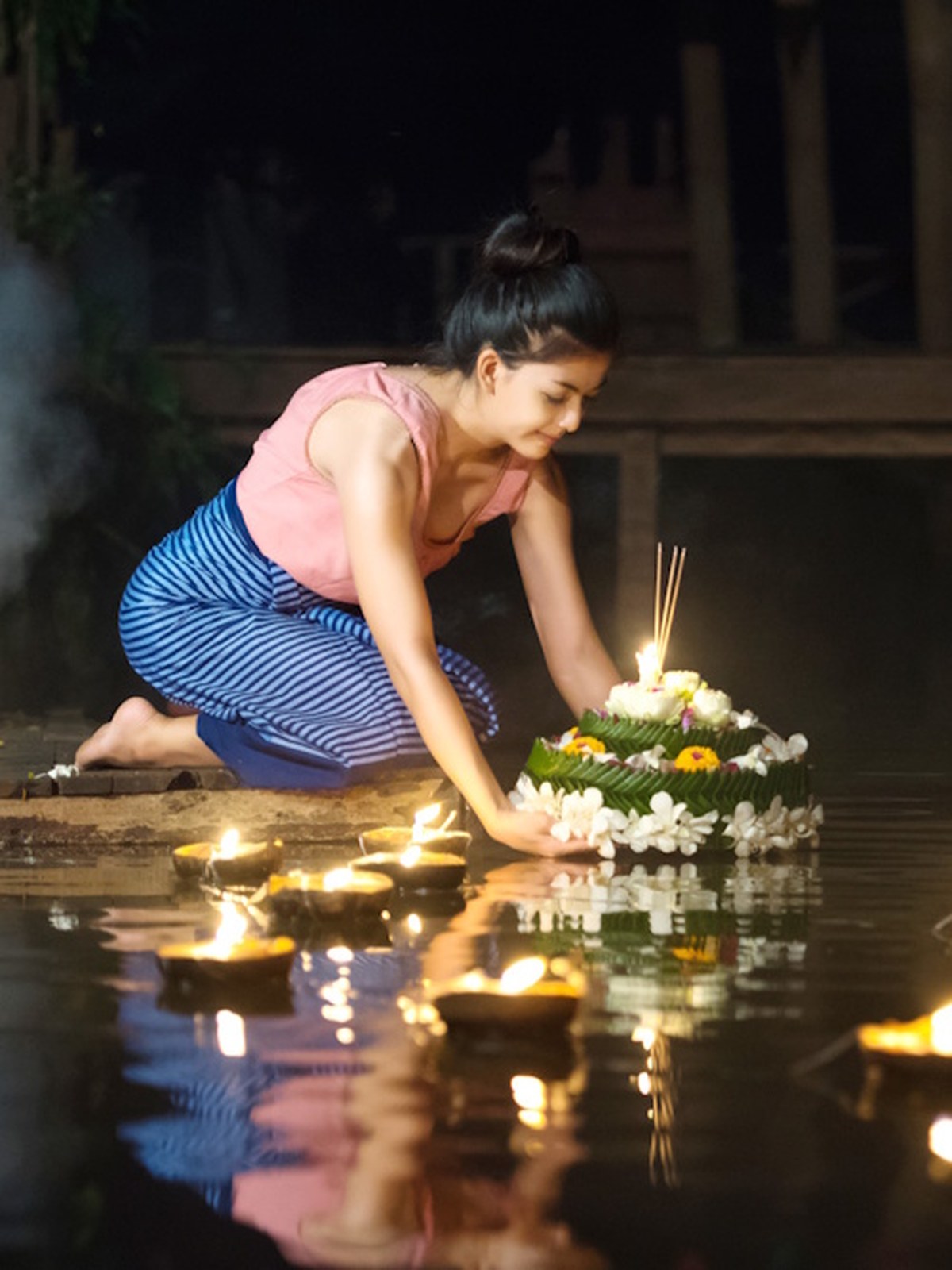
Celebrated on the full moon of the twelfth Thai lunar month, generally in November, Loy Krathong invites you to entrust to the water small rafts of offerings, the krathong, traditionally shaped from banana trunk and leaves, then adorned with flowers, candles and incense. This gesture expresses gratitude towards water, personified by Phra Mae Khongkha, while asking forgiveness for harm done to rivers and canals. It also symbolises letting go of misfortune, faults and inner burdens. Beyond its nocturnal beauty, the festival reveals the ancient bond between Thai society, water cycles, plant craft and ritual merit. Buddhist ceremonies, performances, fairs and contests extend this celebration, whose deep meaning remains one of thanks and renewal.

Songkran New Year Festival — immersive cultural experience in Thailand with Rock Around Siam.

Songkran New Year Festival

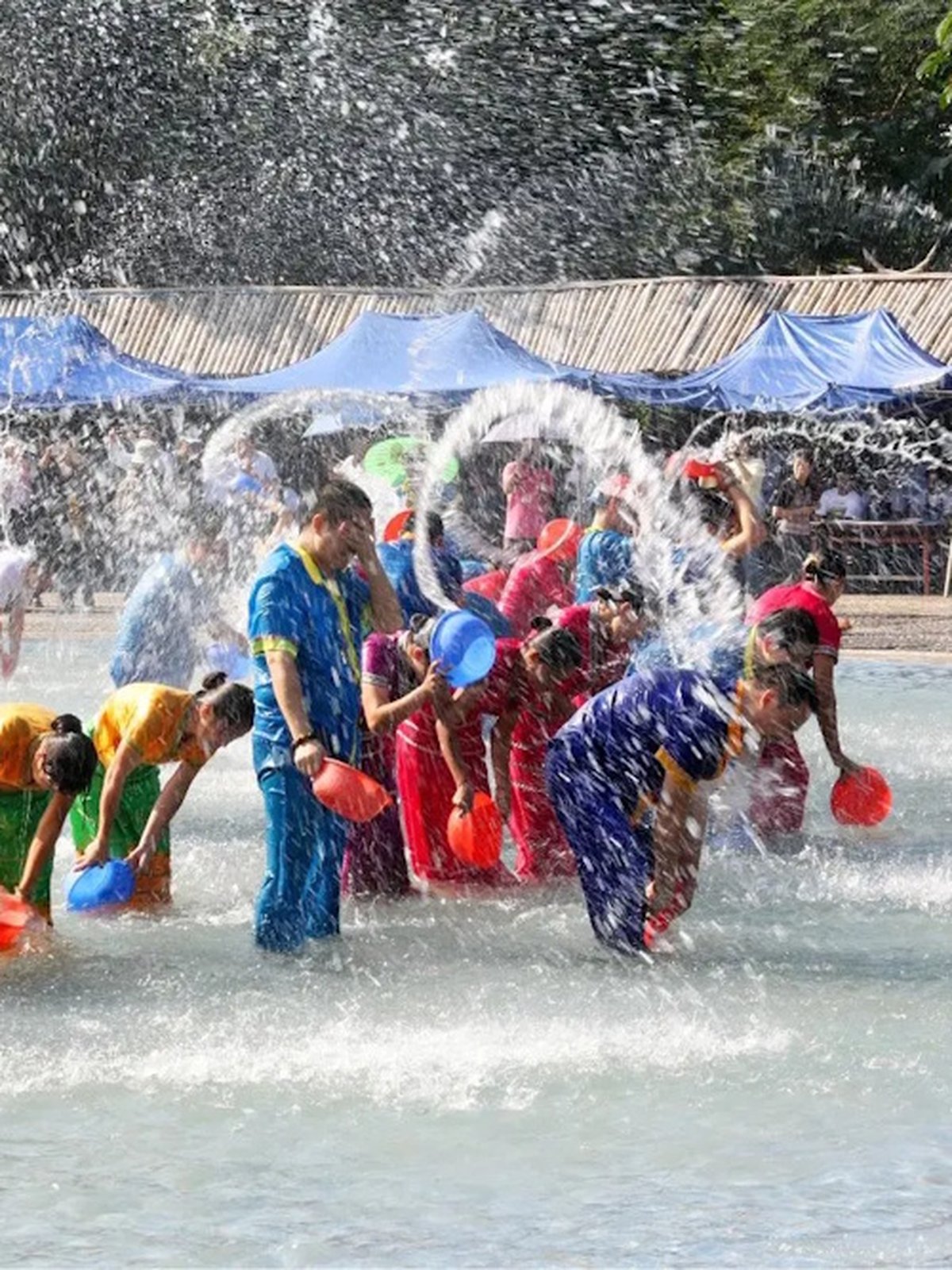
Songkran, the traditional Thai New Year, is celebrated in mid-April, when the sun enters the sign of Aries. Behind the famous water games lies above all a family, spiritual and deeply ritual festival. Thai people gather to honour elders and ancestors, to purify images of the Buddha and to perform the rod nam dam hua, a gesture of respect and blessing. Water, everywhere, symbolises purification, renewal, prosperity and good fortune for the year to come. Celebrated throughout the country according to varied local traditions, Songkran expresses at once family transmission, Buddhist merit, agricultural seasonality and the symbolic place of water. In 2023, this internationally renowned festival was inscribed by UNESCO on the Intangible Cultural Heritage of Humanity.

Yi Peng Festival — immersive cultural experience in Thailand with Rock Around Siam.

Yi Peng Festival

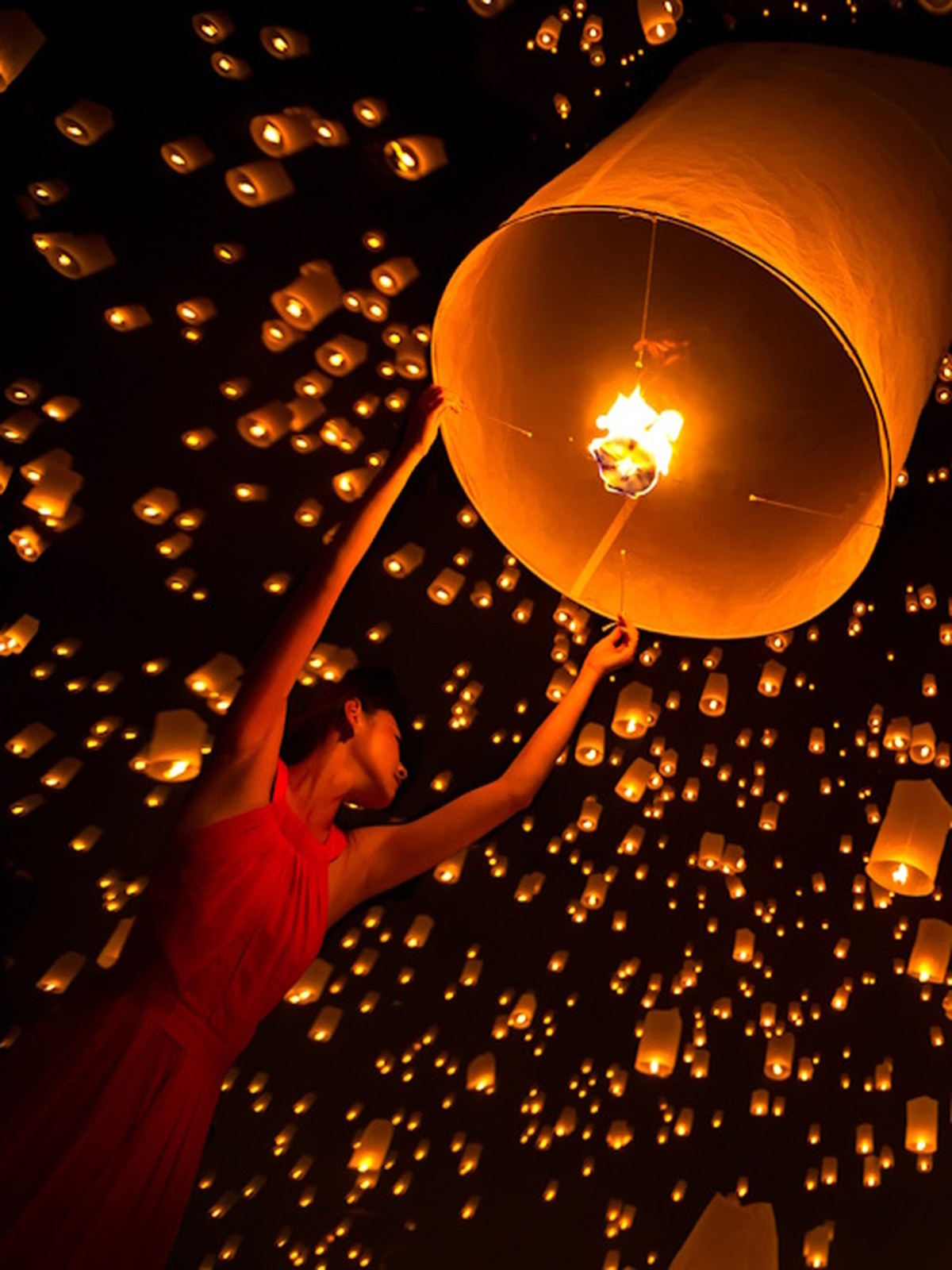
Yi Peng is the great festival of lights of northern Thailand, intimately linked to Chiang Mai and the Lanna heritage. Celebrated on the full moon of the second month of the Lanna calendar, generally in November, it coincides with Loy Krathong. Far beyond the spectacular release of the khom loy, Yi Peng remains a religious and communal festival, dedicated to the Buddha, sacred relics and benefactors. In temples, homes and streets, hanging lanterns and phang pratheep, small clay lamps, express gratitude, prosperity and spiritual elevation. The sky lanterns symbolise letting go of the misfortunes and burdens of the past year. The festival thus reveals all the richness of Lanna aesthetics, Buddhist devotion and the collective traditions of the North.

Hae Pha Khuen That Ceremony — immersive cultural experience in Thailand with Rock Around Siam.

Hae Pha Khuen That Ceremony

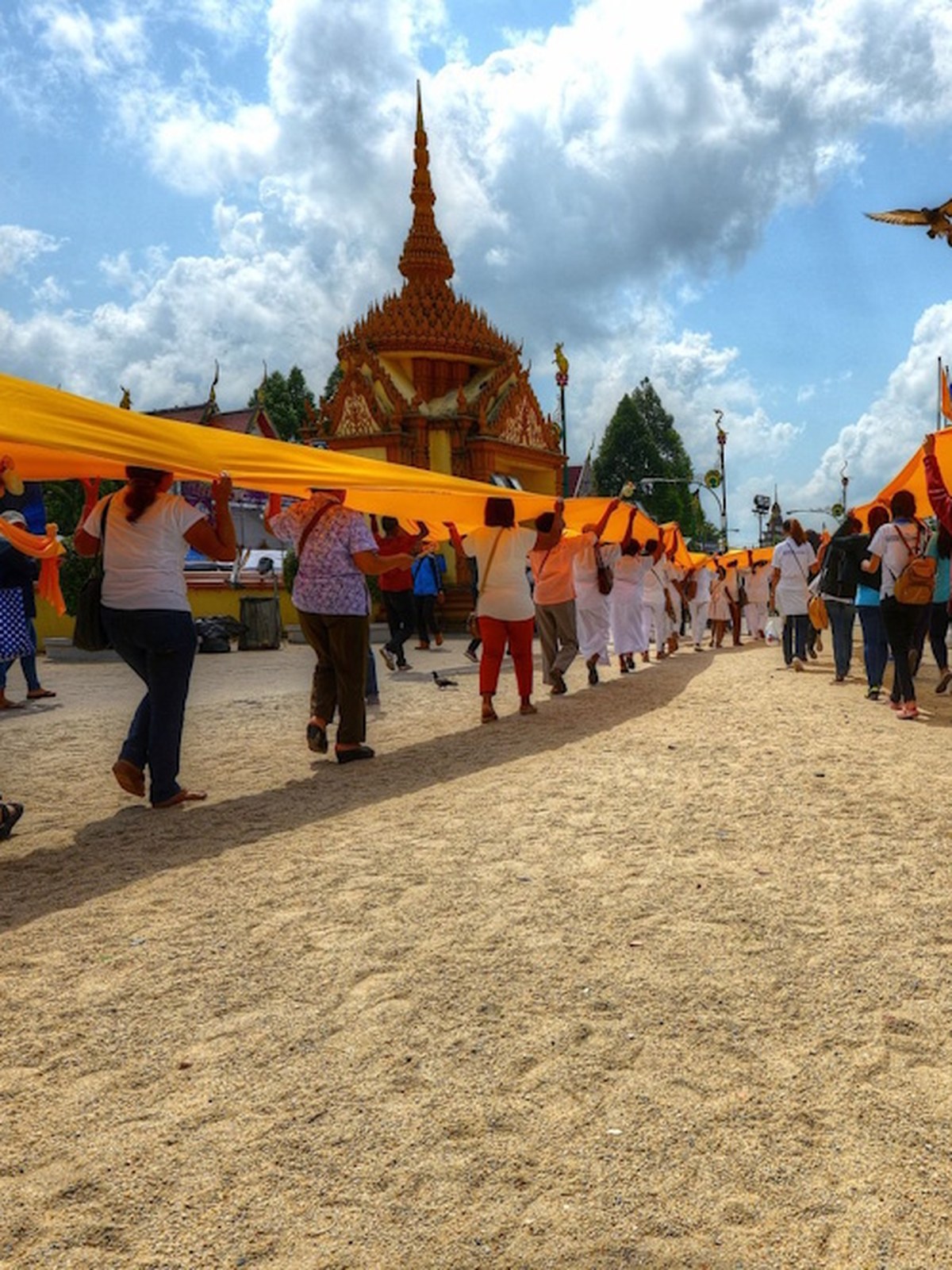
Hae Pha Khuen That is one of the most emblematic religious traditions of Nakhon Si Thammarat, in southern Thailand, celebrated around Makha Bucha. The faithful carry in procession an immense sacred yellow cloth, the Phra Bot, before wrapping it around the great stupa of Wat Phra Mahathat Woramahawihan, which houses relics of the Buddha. Funded collectively, the pieces of cloth are sewn into a long band that can reach several kilometres. This gesture, likened to the symbolic offering of a garment to the Buddha, unites pilgrimage, collective fervour and ritual craft. Deeply rooted in the spiritual history of the Thai South, this ceremony favours participation, the solemnity of the rite and the continuity of a faith passed down over centuries.

Chak Phra Festival — immersive cultural experience in Thailand with Rock Around Siam.

Chak Phra Festival

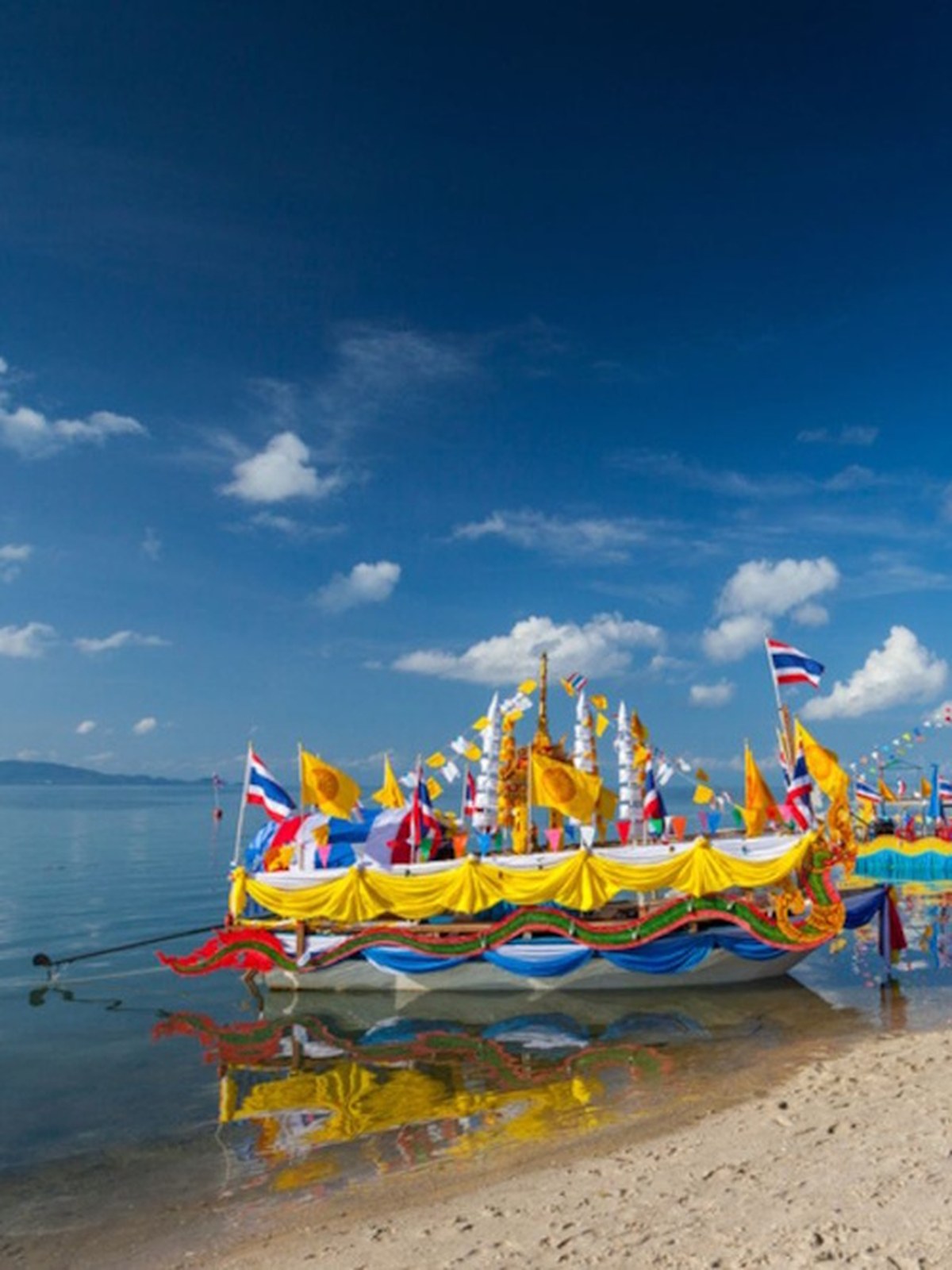
Celebrated at the end of the rains retreat, generally in October, Chak Phra — literally "pulling the Buddha" — is one of the great Buddhist festivals of southern Thailand. It commemorates the Buddha's return to earth after his celestial sojourn and gives rise, depending on the province, to spectacular processions on land or water. Sacred images are placed on richly decorated floats or boats, which the inhabitants pull together with ropes. This collective gesture expresses both religious fervour and solidarity around the temple. Offerings to monks, boat races and local festivities often complete the celebration, revealing a southern Thailand deeply attached to its traditions, to water and to the strength of community bonds.

From the contemplation of dawn to sacred gestures passed down over centuries, these experiences open a discreet door onto the spiritual life of Siam, between temples, monks and beliefs.

Annual Wai Khru Ceremony — immersive cultural experience in Thailand with Rock Around Siam.

Annual Wai Khru Ceremony

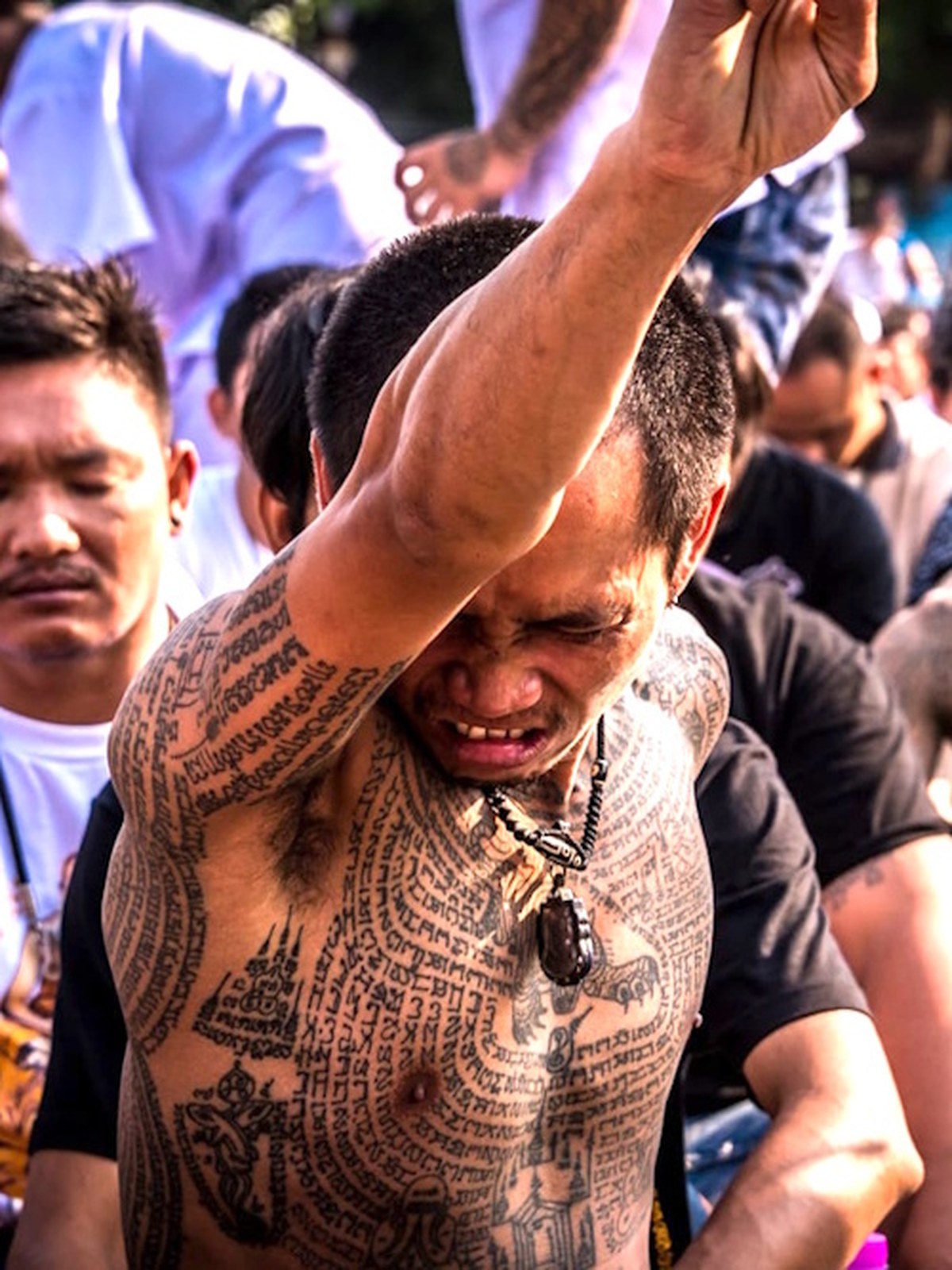
At Wat Bang Phra, in Nakhon Pathom province, the annual Wai Khru dedicated to Sak Yant gathers thousands of the faithful each year, come to honour their spiritual masters and the lineages of sacred tattooing. Bearers of designs credited with protection, luck, strength or healing, participants come to have their tattoos blessed or revived, while some receive new ones. The ceremony is also marked by spectacular states of trance, during which some of the faithful take on the gestures or bearing of the animal associated with their Sak Yant. Far from mere folklore, this gathering is above all an act of devotion, of fidelity to the teaching received and of renewal of a spiritual bond deeply rooted in local tradition.

Facing the power of Sak Yant — immersive cultural experience in Thailand with Rock Around Siam.

Facing the power of Sak Yant

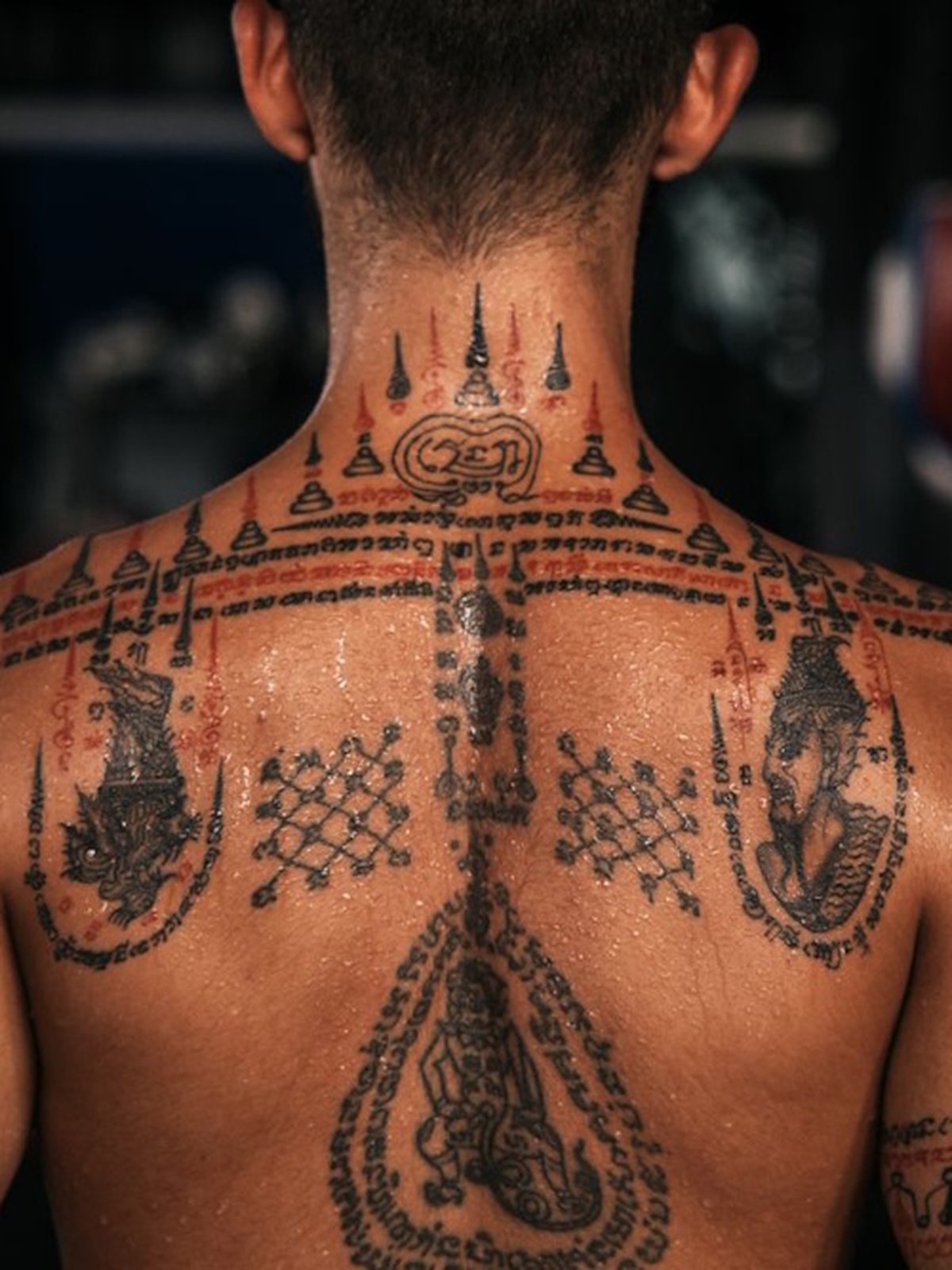
The Sak Yant is a sacred tattoo of Southeast Asia, deeply rooted in the spiritual traditions of Thailand. Its name combines sak, "to tattoo", with yant, derived from yantra, a mystical diagram blending geometry, formulas in Pali or Khom, protective animals and symbolic figures. Far beyond ornament, each design is said to transmit protection, strength, luck, authority, charisma or self-mastery, provided moral principles are respected. Traditionally made by a monk or an ajarn, the tattoo is accompanied by prayers, mantras and a blessing that gives it its ritual dimension. During the Wai Khru, the faithful come to renew this spiritual protection. Wat Bang Phra remains one of the high places of this living tradition in Thailand.

Boon Pha Wet Religious Festival — immersive cultural experience in Thailand with Rock Around Siam.

Boon Pha Wet Religious Festival

Boon Pha Wet is one of the great religious festivals of Isan, with a particular resonance in Roi Et. Devoted to the Vessantara Jataka, the last existence of the future Buddha before his final rebirth, it brings the Mahachat to life through sermons, recitations and vast processions illustrating its thirteen chapters. Merit ceremonies, teachings and parades mobilise local communities in a fervent, popular atmosphere. The tasting of khao poon, rice noodles associated with the celebrations, is one of its markers. Still little known to international travellers, Boon Pha Wet offers a rare immersion in a narrative and collective Buddhism, where spiritual transmission, regional memory and community cohesion are expressed with singular force.

Poi Sang Long Ceremony — immersive cultural experience in Thailand with Rock Around Siam.

Poi Sang Long Ceremony

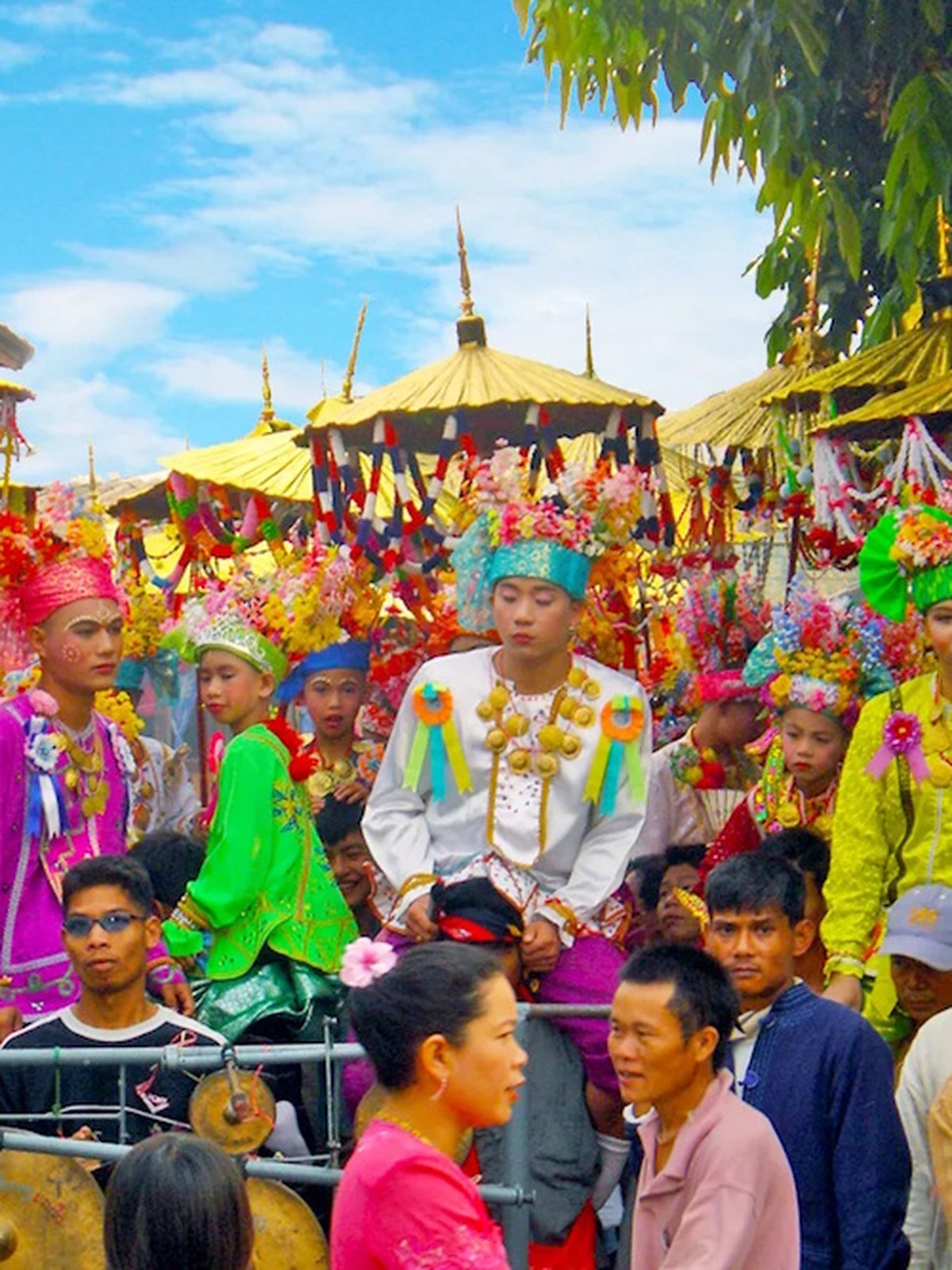
In Mae Hong Son, Poi Sang Long is one of the most emblematic ordination ceremonies of northwestern Thailand. Inherited from the Tai Yai communities, it accompanies boys aged seven to fourteen towards monastic life over several days. Dressed in princely costumes evoking Siddhartha before his renunciation, the future novices are carried on shoulders through dazzling processions, punctuated by music and collective fervour. Beyond the splendour of the parades, the ritual celebrates entry into Buddhist discipline, the merit acquired by the family and the tribute paid to parents. Poi Sang Long thus fully reveals the Shan heritage of Mae Hong Son, the cultural diversity of the kingdom and the plurality of Buddhist traditions that shape Thailand.

The morning offering to monks — immersive cultural experience in Thailand with Rock Around Siam.

The morning offering to monks

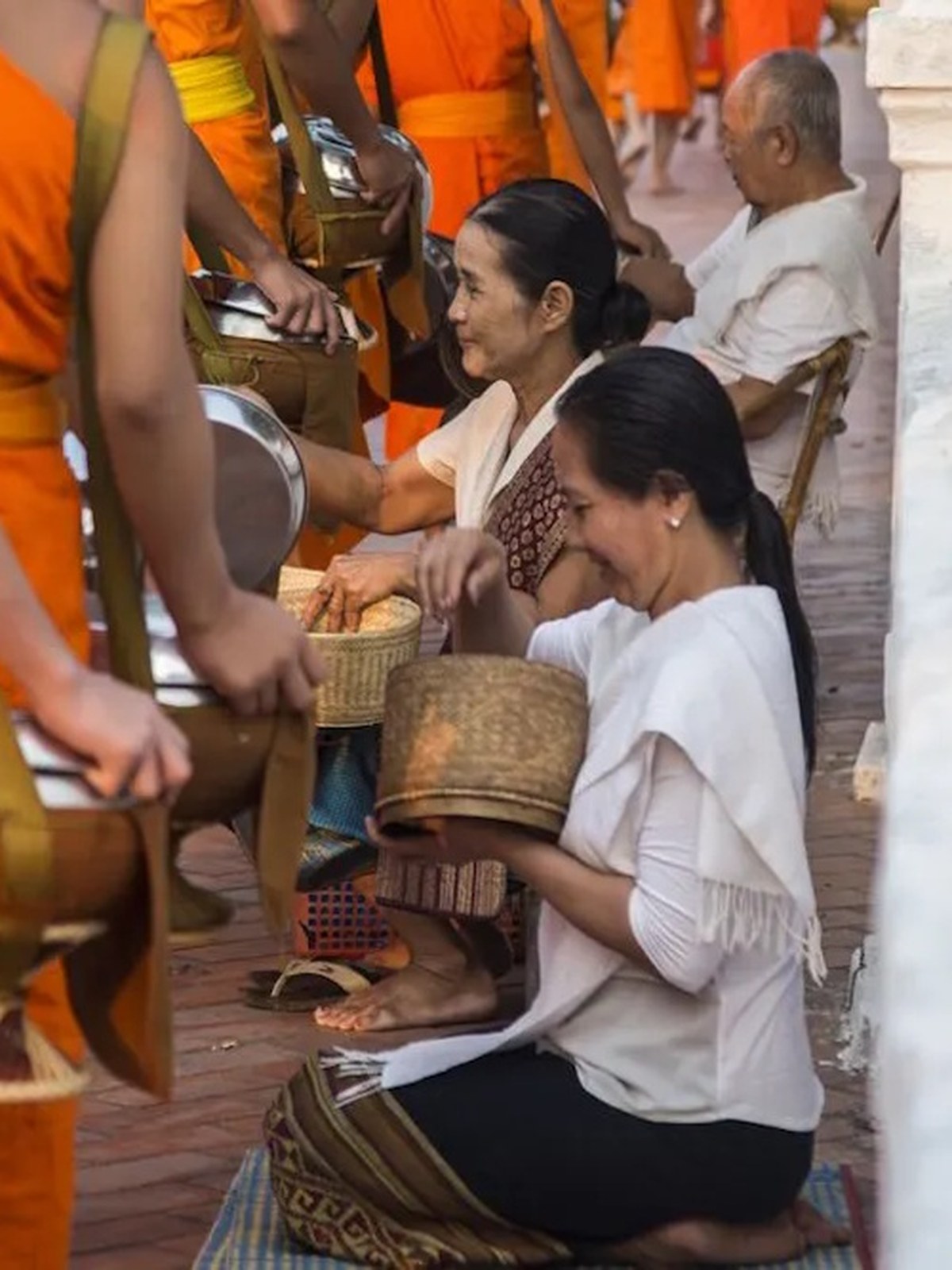
Taking part in the morning offering to monks, before sunrise, allows you to enter one of the most familiar gestures of Thai Buddhism. Barefoot, the monks walk the streets while the inhabitants place rice, prepared dishes, drinks or essential goods in their bowls. Behind this simplicity lies a deep bond between lay life and the monastic community, founded on material support and the acquisition of merit, a central notion of Buddhist practice in Thailand. The experience calls for sobriety, respect and attentiveness: discreet dress, appropriate posture, silence, observance of customs and the receiving of the blessing. Without staging, this daily ritual offers a rare immersion in the discipline, humility and ordinary spiritual rhythm of Thailand.

Meditation in a Thai temple — immersive cultural experience in Thailand with Rock Around Siam.

Meditation in a Thai temple

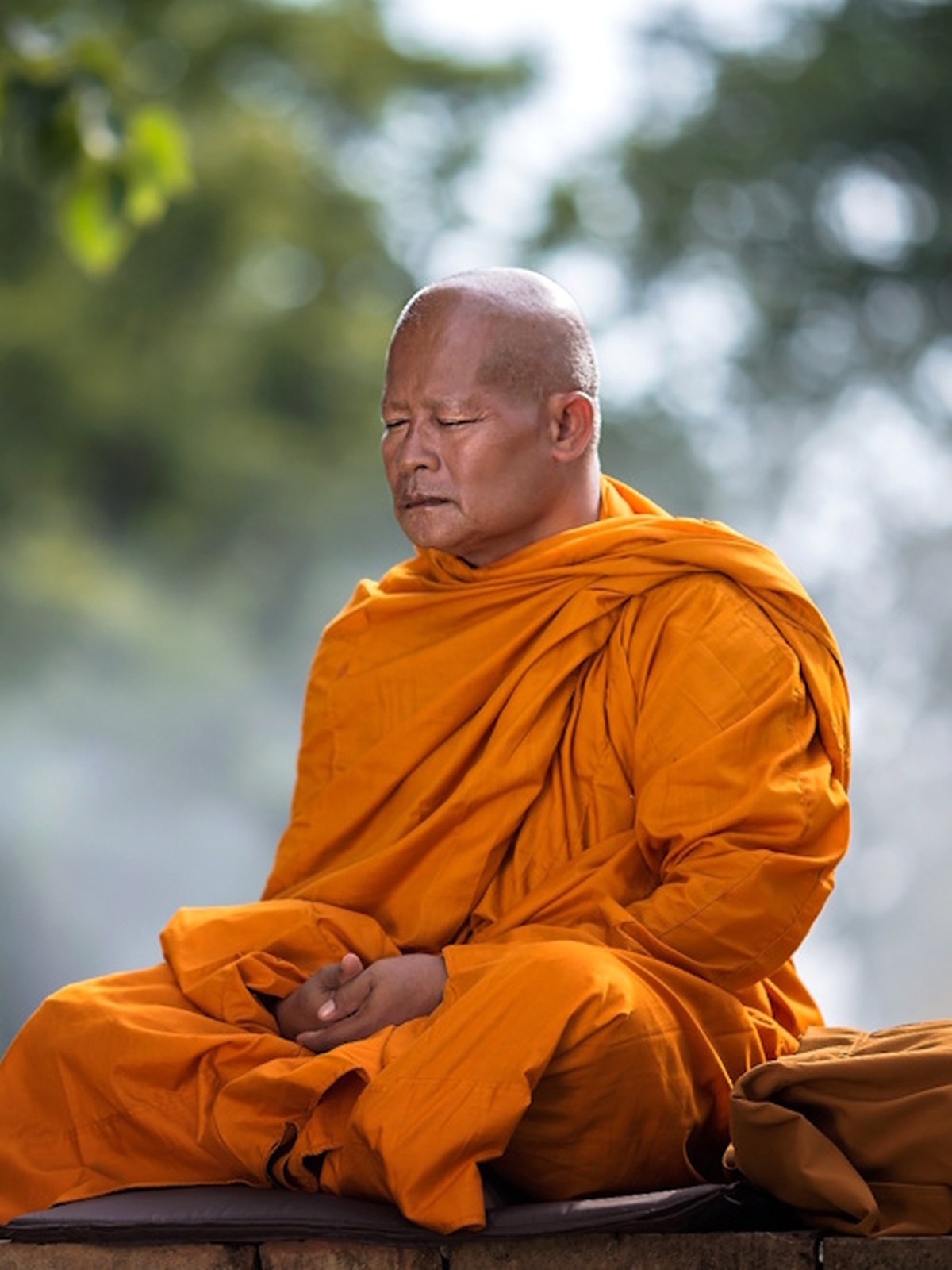
To experience meditation in a Thai temple is to move beyond the heritage visit and approach an inner practice at the heart of Theravada Buddhism. In many temples and centres, the introduction lasts a few hours or several days, following a sober rhythm blending seated meditation, walking meditation, silence, observation of the breath and teachings. Beyond its spiritual dimension, this immersion sheds light on the place of self-discipline, self-mastery and the work of the mind in Thai culture. In Bangkok, Wat Mahathat sets this practice within a high place of Buddhist study. The temple then ceases to be merely looked at: it becomes a lived space, in which to slow down, practise and better understand the presence of Buddhism in Thai life.

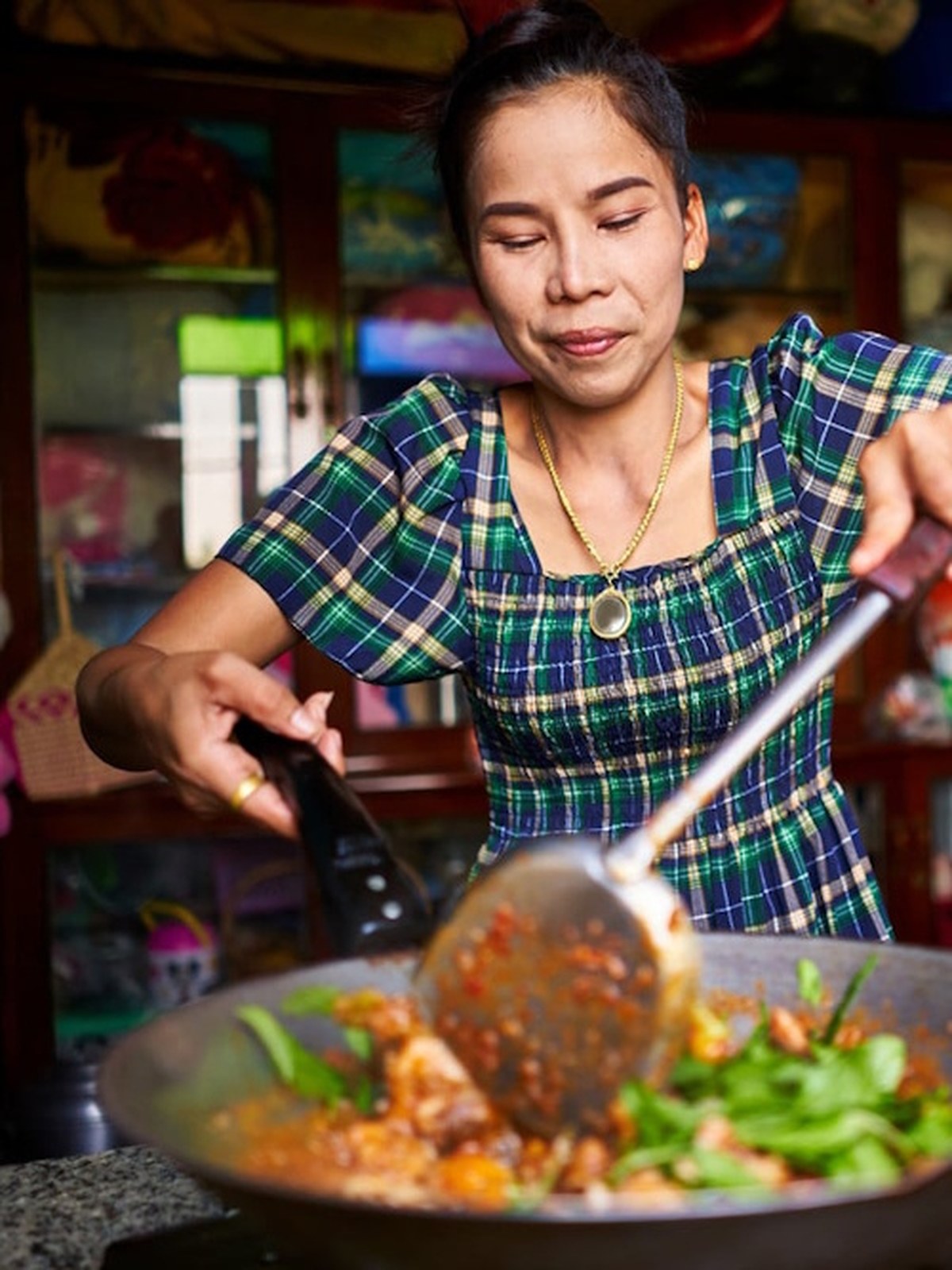
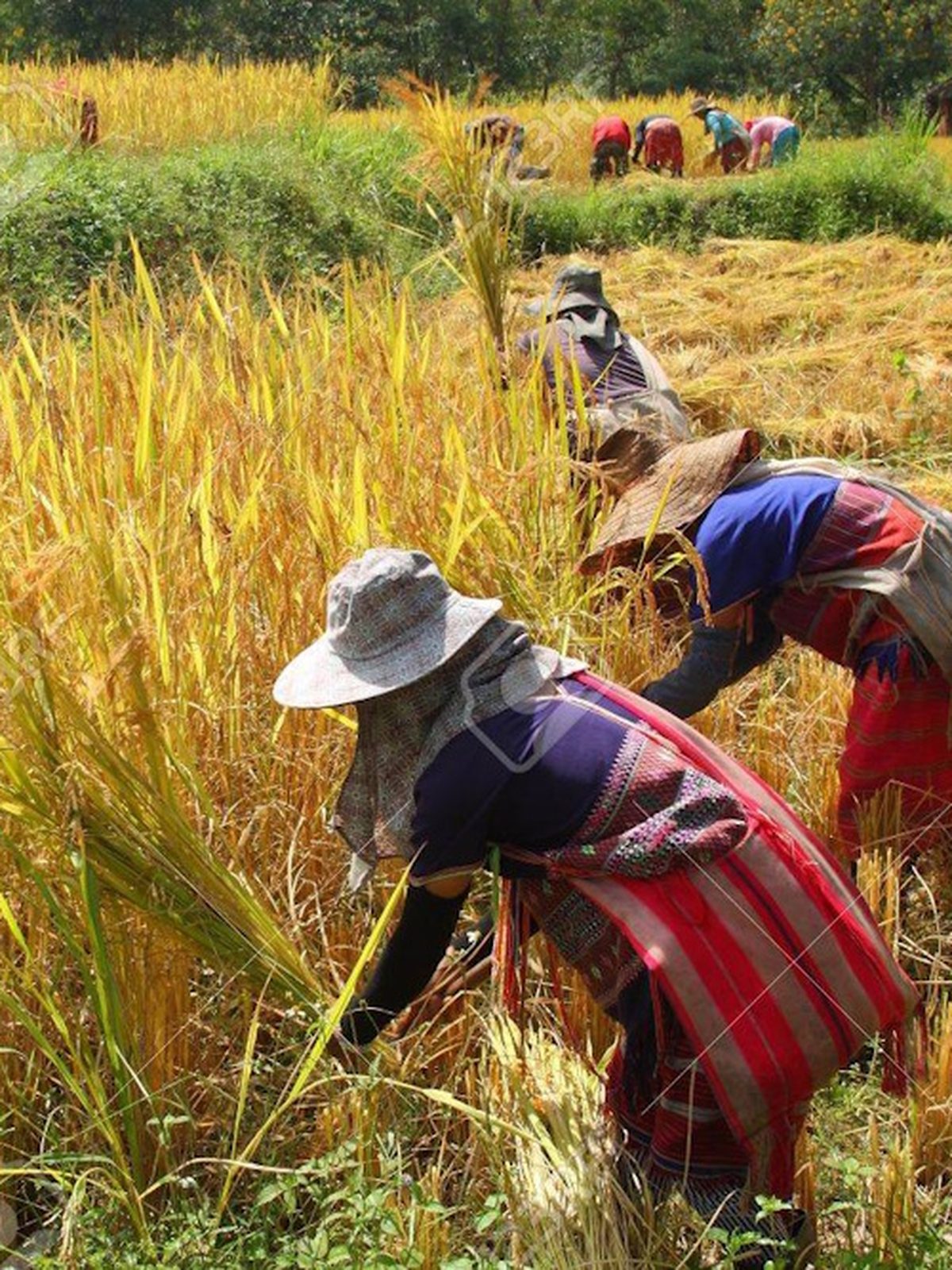
From street stalls to rice fields, Thai culture is tasted as much as it is seen: an immersion through flavours, produce and nourishing know-how.

Cooking Thai dishes — immersive cultural experience in Thailand with Rock Around Siam.

Cooking Thai dishes

A culinary immersion in Thailand begins long before the stove. It takes shape in the markets, among fresh herbs, curry pastes, vegetables, fermented sauces, dried fish and mortars, where the arrangement of the stalls already reveals a culture of taste. Inherited from regional traditions, trade and family know-how, Thai cuisine rests on a subtle balance of flavours. Identifying lemongrass, galangal, kaffir lime, Thai basil or palm sugar, then preparing a few emblematic dishes, helps you grasp its logic. Tom yum kung, inscribed by UNESCO in 2024, illustrates this transmission where ingredients, gestures and memory echo one another. Well conceived, a cooking class thus becomes a genuine sensory initiation into Thailand.

Sharing the rice cycle — immersive cultural experience in Thailand with Rock Around Siam.

Sharing the rice cycle

To immerse yourself for a few hours or a few days in the world of rice is to approach one of the foundations of Thai culture. Far more than a food crop, rice links seasonal knowledge, agricultural gestures, beliefs and rites to an intimate conception of the balance between land, water, work and prosperity. The Tum Khwan Khao ceremony, or calling of the soul of the rice, recalls how the grain is perceived as a presence to be respected and thanked. Preparing the seedlings, reading the plots, transplanting, harvesting, cooking or passing on local rites make up an immersion in the rhythm of the countryside. Beyond the landscape, the experience reveals the central place of the rural world in the Thai imagination and in a culture shaped by the land and the cycles of nature.

Exploring Thai street food — immersive cultural experience in Thailand with Rock Around Siam.

Exploring Thai street food

Thai street food is far more than a repertoire of popular addresses: it expresses a way of living the city, of passing on recipes and of bringing family traditions, regional cuisines and contemporary rhythms into dialogue. From noodles to grilled skewers, up to the most elaborate preparations, the street extends without a break the refinement of Thai cuisine. The experience takes on its full meaning when you learn to read a neighbourhood through its stalls, its hours, its regulars, its gestures and its cooking methods. As night falls, food redraws the flows, animates encounters and reveals the public space as a genuine culinary territory — alive and deeply social, where flavours, the memory of passing time, gestures and conviviality mingle.

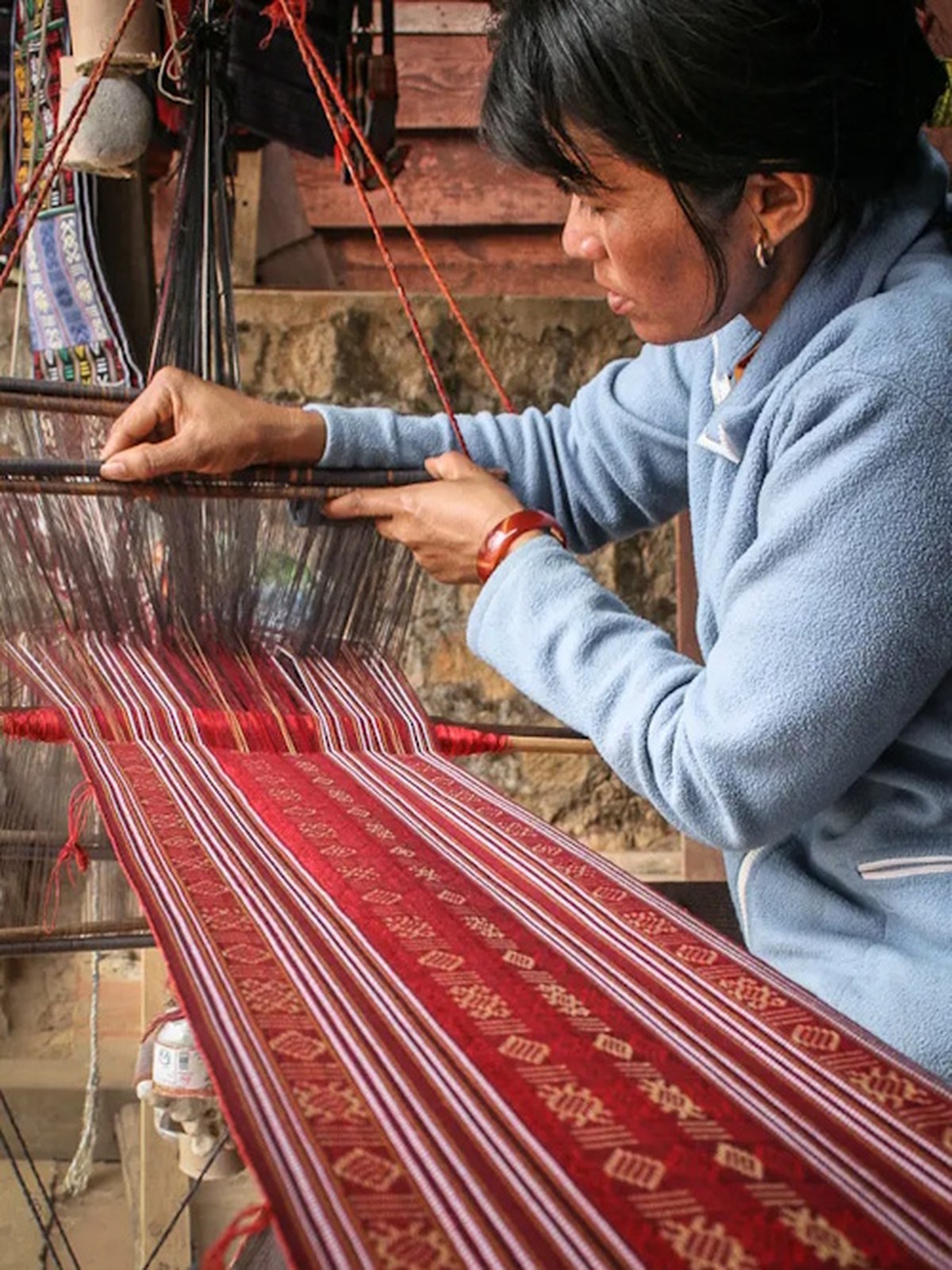
Dyeing, weaving, masked dance: behind each gesture lies a patient transmission. These workshops and living arts reveal the hand and soul of the artisans.

Taking part in a dyeing workshop — immersive cultural experience in Thailand with Rock Around Siam.

Taking part in a dyeing workshop

Traditional Thai textile reveals a world where materials, gestures and territories echo one another. Silk, cotton or hemp, regional motifs, complex weaves and natural dyes compose a language passed down from generation to generation. In a workshop or a village of weavers, the fabric is discovered as far more than a decorative object: it embodies a memory, a status, a family economy and a local identity. Fruits, bark, flowers or wood provide the pigments, while the mat mii of Isan requires reserving and then dyeing the threads before weaving. Observing the gestures, touching the fibres and understanding the time devoted to each motif transforms the way you look and opens a door onto an artisanal and traditional Thailand — patient, deeply attached to its know-how.

Entering the world of Khon — immersive cultural experience in Thailand with Rock Around Siam.

Entering the world of Khon

Discovering Khon in good conditions, with an introduction to the masks, the gestures, the costumes and the music, offers a privileged immersion in the classical Thai imagination. Inscribed on UNESCO's Intangible Cultural Heritage list in 2018, this court art combines literature, song, music, codified movement, ritual and craftsmanship. Inspired by the Ramakien, its stories stage loyalty, power, cunning, combat and justice through immediately recognisable figures. A guided rehearsal, an introduction to the postures, a meeting with a craftsperson or a contextualised performance help you grasp its depth. Khon thus reveals an aesthetic of gesture and detail, while shedding light on the history of the arts and the symbolic culture of Thailand.

The body too attunes itself to Siam: the meditative gentleness of traditional massage, the disciplined energy of Muay Thai — two paths towards balance.

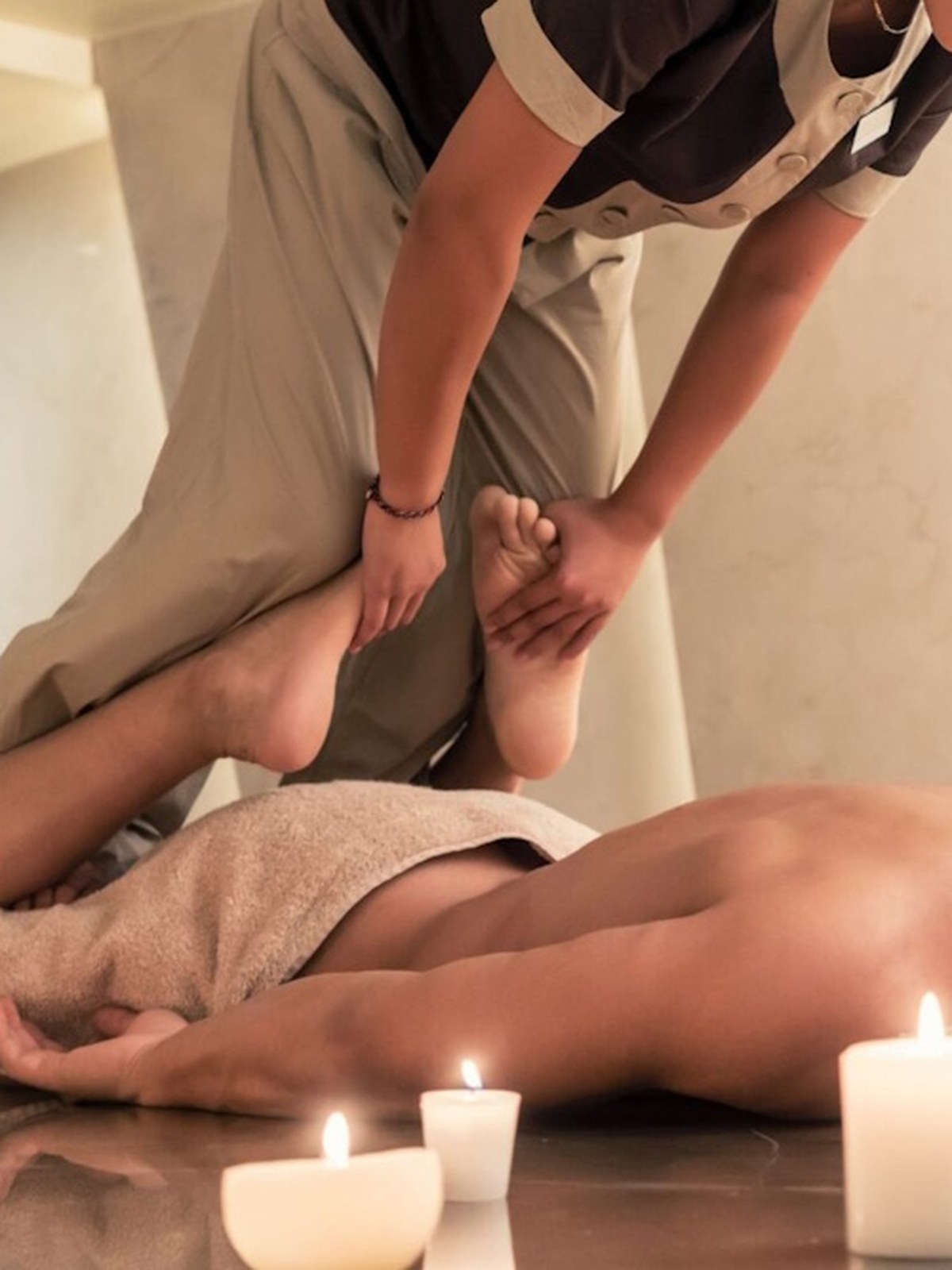
Receiving a Nuad Thai (massage) — immersive cultural experience in Thailand with Rock Around Siam.

Receiving a Nuad Thai (massage)

Receiving an authentic Nuad Thai goes far beyond the idea of a simple massage: inscribed by UNESCO on the Intangible Cultural Heritage of Humanity, it belongs to a therapeutic knowledge where art, science and Thai traditions meet. Pressures, stretches, mobilisations and manipulations follow one another according to an energetic reading of the body based on the sen lines and the balance of the four elements. The experience consists as much in feeling the care as in understanding its philosophy. In a recognised school, a traditional-medicine centre or a temple linked to this heritage, Nuad Thai reveals a culture of well-being founded on the transmission of gestures, respect for the practitioner, slowness and a deeply holistic conception of health, still very much alive in Thailand today.

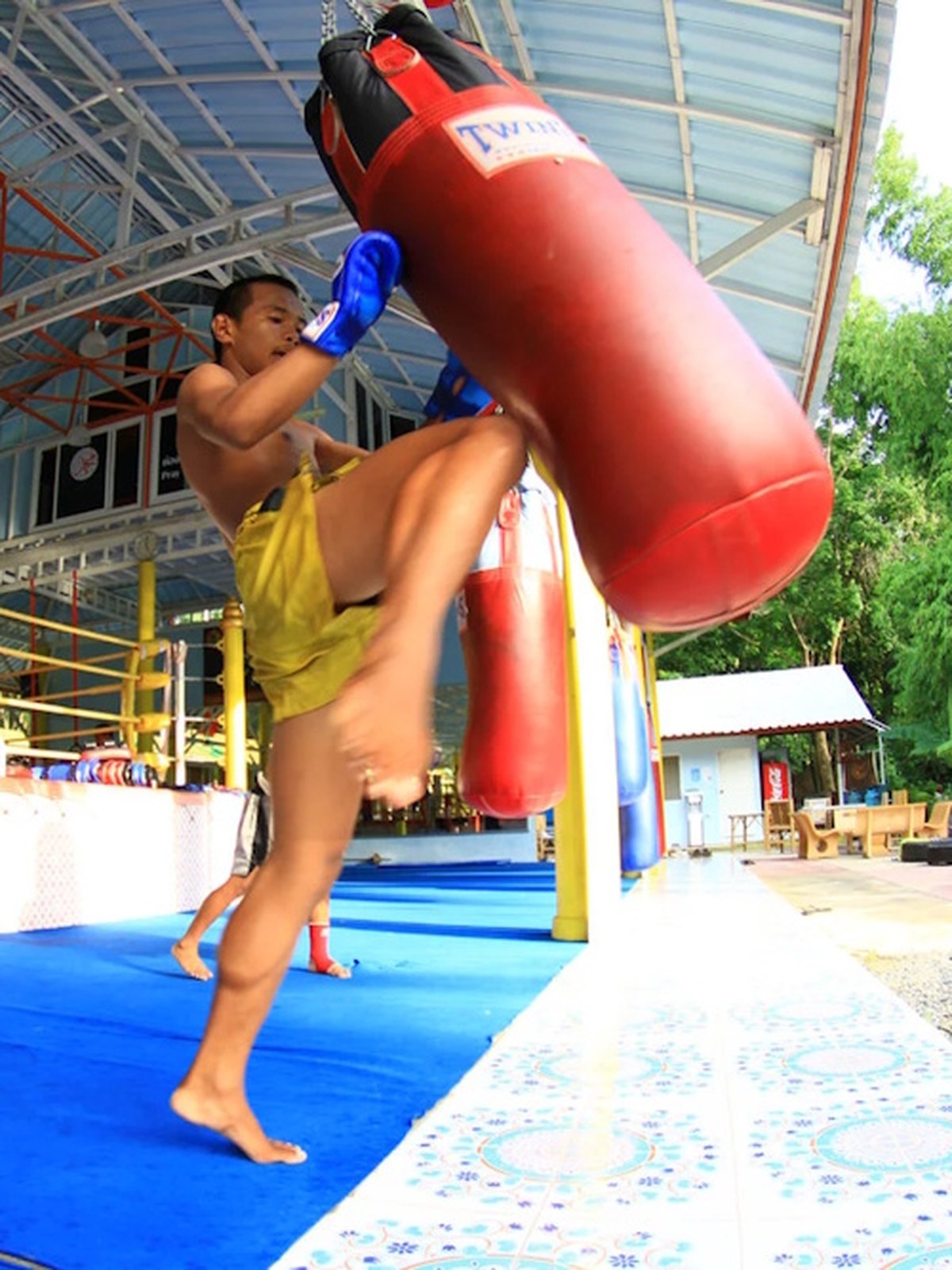
Learning Muay Thai (Thai boxing) — immersive cultural experience in Thailand with Rock Around Siam.

Learning Muay Thai (Thai boxing)

Muay Thai is certainly discovered as a combat sport, but an attentive introduction reveals above all a culture founded on respect, endurance and transmission. Before the techniques come the salute, the relationship with the master, the discipline of the body and the wai khru, a ritual performed before the fight to honour teachers, parents and training lineage. In a local camp, the experience is not limited to strikes on pads or to combinations: it gives access to the ethics of training, the discreet hierarchy among students, the Thai vocabulary, the sense of rhythm and the community roots of this national art. Muay Thai thus opens a singular path towards a Thailand where physical mastery, loyalty, respect for ritual and self-construction remain closely bound.

Two ways to set off


Guided, or entirely at your own pace.

Guided journeys & tours

Complete organisation, personalised support and a deep understanding of the places you travel through — every detail is coordinated for you.

Request a proposal

Independence with Siamnity

Freely compose your journey with our mobile platform of cultural audio guides: you choose the places, the duration and the themes, at your own pace.

Discover Siamnity

Something specific in mind?

Let's design the experience that suits you.